Hey there, socket squad! I’m Jake, and every day, I get DMs from electricians, plant managers, and DIY guys panicking because their wall mount industrial socket fried out way sooner than it should’ve. Last week, a guy hit me up from a food processing plant in Florida—his old socket corroded so bad it sparked mid-shift, and the whole line shut down for 12 hours. Another text came in from a construction site in Wyoming, where dust and freezing temps turned a cheap socket into a fire hazard. Here’s the thing: picking the wrong wall mount industrial socket isn’t just an inconvenience—it’s dangerous. And way too many people skip checking their actual job site’s conditions, grab the cheapest one on Amazon, and end up paying way more down the line. As a socket supplier who’s been in the game for 10 years, I’m breaking down exactly how to choose the right one based on your environment, no jargon, no fluff. Let’s dive in. Wall Mount Industrial Socket
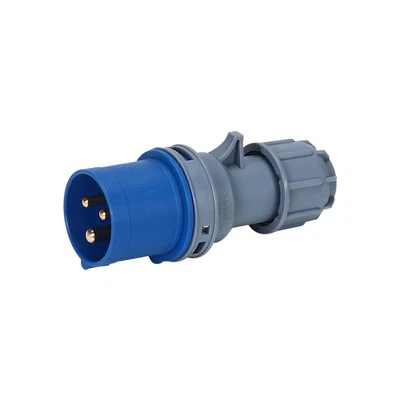
First up, let’s talk about the big one for most industrial spaces: moisture and humidity. This isn’t just “it rained last week” stuff—we’re talking things like a meat packing plant in Texas that hoses down the concrete floor daily, or a marine shop in Seattle that’s right on the water, where salt fog hangs in the air 24/7. Moisture is bad because it breaks down the metal parts inside the socket, right? And if water gets into the connections, that causes arcing, overheating, even electrocution risks. So what do you look for here? First, the IP rating—this isn’t a random number, I’ll break it down simple. The first digit is solid particle protection, the second is liquid. If you’re dealing with splashes, occasional rain, or high humidity (like 90%+ in a greenhouse), you want at least IP44—That means it’s protected from solid particles bigger than 1mm (like tool bits or rust flakes) and splashes from any direction. But if you’re dealing with full-on water jets—like a car wash bay that blasts your equipment or a food plant that pressure-washes walls—you need IP67 or even IP69K. Wait, what’s the K mean? It’s for high-temperature, high-pressure water jets, which is exactly what those commercial washdowns use. I saw a guy use an IP44 socket in his pressure-wash bay once—lasted 3 days before the internal terminals corroded. Total waste of $40. Also, check the material of the socket’s body. If it’s metal, make sure it’s plated with something that resists corrosion—like zinc nickel or stainless steel 316, not just regular steel that will rust in a month. For saltwater environments, 316 stainless is non-negotiable—regular stainless (304) will still pit from salt fog. Trust me, I’ve seen that too.
Next, let’s talk about dust and particulate matter. This is huge for construction sites, sawmills, grain elevators, even workshops where you grind metal all day. Dust isn’t just messy—it’s abrasive, and if it gets into the socket’s contacts, it acts like sandpaper, wearing down the prongs and leading to bad connections that overheat. Also, some dust is flammable—like grain dust or sawdust—and if it gets into an overheated socket, that’s a fire waiting to happen. So what do you need here? Again, the IP rating comes in. For environments with fine dust (like a sawmill with sawdust that’s powdery, or a grain elevator with flour dust), you want IP65 or higher. IP65 means it’s completely dust-tight (the 6 is for solid protection, 6 is no dust getting in at all) and protected against low-pressure water jets, which is a bonus if you need that too. Wait, IP44 is only protected from solids bigger than 1mm, right? So fine sawdust can sneak into IP44 sockets and gum up the works. I had a client from a lumber yard tell me his old socket got so gummed up with sawdust that when he plugged in a chainsaw, the prongs couldn’t make full contact, and the chainsaw overloaded. That cost him a $200 chainsaw and a week of downtime before he swapped to our IP65 sockets. Also, look for sockets with sealed contact points and dust caps—especially if the socket isn’t in use all the time. When you unplug a tool, put the cap back on, don’t leave it hanging open for dust to get in. That’s a quick, free trick that adds years to a socket’s life.
Now, temperature extremes. This is a big one for places like Alberta oil fields in the middle of winter, where temps drop to -40°F, or a factory in Arizona where the wall surfaces hit 150°F in the summer sun. Most off-the-shelf sockets are rated for like -20°F to 120°F, which is fine for a home workshop, but if you’re way outside that range, you’ll have problems. Cold temps make plastic parts brittle—so if your socket’s made of regular plastic, it’ll crack when the temperature drops, letting moisture and dust in. For cold environments, look for sockets rated for low temps down to -40°F or even lower. The material here is key: use of polycarbonate that’s been modified for cold resistance, not just the cheap plastic that cracks like an eggshell. For high temps—like if your socket’s going to be mounted on a wall near a furnace, or in a desert workshop—you need sockets made of high-temperature-resistant materials, like thermoset plastic or even aluminum alloy. Regular polycarbonate will warp in temps over 120°F, and when that happens, the socket won’t line up right with plugs, leading to bad connections. I had a client in Phoenix swear by his old socket that “it’s fine, it’s only 130°F here in July” — lasted 2 weeks before it warped so bad you couldn’t plug anything in. Swapped to our high-temp sockets, and he hasn’t had an issue in 2 years. Also, check if the socket has a built-in thermal cutout for really extreme heat—this will turn off power if the socket gets too hot, preventing fires. That’s a game-changer for unmonitored job sites.
Wait, we can’t forget about chemical exposure. This is for places like labs, manufacturing plants that use cleaning chemicals, or even agricultural sites with fertilizers and pesticides. Chemicals (acids, alkalis, solvents, fertilizers) eat away at socket materials, just like salt does, but they’re often more corrosive. If you’re dealing with cleaning chemicals, look for sockets that are chemical-resistant—usually made of materials like PVC that’s been formulated to resist common cleaners, or FKM rubber seals that don’t break down from chemicals. I once had a client from a potato farm in Idaho where he used sockets near fertilizer bins. The fertilizer fumes ate through the rubber seals on his old sockets, and within 6 months, the metal parts were corroded. Swapped to our chemical-resistant sockets with FKM seals, and that problem went away entirely. For lab environments, where you might have harsh acids or solvents, you might even need sockets with sealed internal components and a PTFE coating to repel chemicals. Don’t skip this, even if it seems like “only occasional exposure”—chemicals add up over time.
Now, let’s talk about something a lot of people overlook: mechanical stress and physical location. Where is your socket mounted? Is it in a high-traffic area where people bump into it all the time? Is it on a construction site where heavy equipment might swing near it? Is it mounted on a wall that gets vibration from a nearby conveyor belt or generator? All of these affect what you need. For high-vibration areas—like near a running machine—you need sockets with tight locking mechanisms, not just loose prongs that wiggle around. Vibration causes connections to come loose, leading to arcing and overheating, same as dust. Look for sockets with screw-in terminals or spring-loaded contacts that stay secured even with constant movement. For areas where the socket might get bumped, go for a socket with a durable outer casing, like metal instead of plastic, so it doesn’t crack if something hits it. I had a client on a highway construction site where a backhoe almost knocked a socket off the wall—his old plastic socket shattered, and he had to shut down the lane to fix it. Swapped to our heavy-duty metal wall mount sockets, and they’ve survived being bumped by equipment, rain, snow, you name it, for 3 years. Also, think about the mounting height—don’t mount a socket in a spot where it’s going to get submerged in standing water (like at the base of a wall that floods occasionally) — if you can mount it higher, that’s a free upgrade for durability.
Wait, let’s bust a common myth here: higher IP rating doesn’t always mean better. If you’re in a dry, clean workshop with no moisture, dust, or chemicals, an IP44 socket is totally fine. You don’t need to drop extra cash on an IP67 socket that’s overkill—you’re just wasting money. The key is matching the socket’s specs exactly to your environment. I see this all the time—someone buys the highest rated socket they can find, even though they only need IP44, and it costs them twice as much as it should. Do your homework first, check your job site’s conditions, and pick what you need, not what’s fancy.
Another thing to consider: brand vs. no-name. I get it, the cheap socket on the market looks identical to the $20 one I sell. But I’ve tested hundreds of no-name sockets—their IP ratings are usually inflated, their materials are thin, their internal terminals are made of cheap copper that wears out fast. Last year, a client brought in a no-name socket he bought for a construction site—he said it started sparking after 2 weeks. When I opened it, the internal copper prongs were so thin they were almost broken, and the plastic casing started cracking from dust exposure. My sockets go through rigorous testing—temperature cycling, water jet testing, dust testing, chemical exposure testing—so you know they’re going to hold up. That’s worth the extra few bucks, trust me.
Let’s do a quick real-life example to wrap this up. Let’s say you’re a plant manager at a food processing plant in Florida. Your floors are hosed down twice a day, there’s salt air nearby, and you have constant high humidity. What do you pick? You need IP67 or IP69K rating, 316 stainless steel or corrosion-resistant zinc alloy body, FKM rubber seals to resist cleaning chemicals, and a low-temperature rating if the plant’s AC keeps it cool. You don’t need a super high temperature rating, but you do need corrosion resistance. That’s the exact socket we supply for that use case, and our clients in similar spots have a 5-year average lifespan, compared to 1 year for the no-name ones they used before.
If you’re a construction site foreman in Wyoming, where it drops to -35°F in the winter, there’s constant dust from digging, and sockets get bumped all the time. What do you pick? IP65 rating, cold-resistant polycarbonate body, tight locking mechanism for vibration, and a low-temperature rating down to -40°F. That’s another one of our go-to sockets for construction sites—they survive the dust, the cold, the bumps, and way cheaper than replacing sockets every month.
At the end of the day, choosing the right wall mount industrial socket is all about knowing your environment, not just picking the first one you see. I’ve been doing this long enough to know that most problems come from cutting corners and not checking conditions. If you’re not sure what you need, just reach out. We can ask you a few quick questions about your job site—what’s the moisture level like? Is there dust or chemicals? What’s the temperature range? And we’ll point you to the exact socket that fits, no pushy sales stuff, no overcharging for features you don’t need.

If you’ve had a bad experience with a socket that failed early, or you’re working on a new project and need help picking the right one, hit us up. We’re here to help you avoid the headaches I see every day, from shut downs to safety hazards. Don’t waste money on the wrong socket—let’s get it right the first time.
Industrial Plug References:
National Electrical Manufacturers Association (NEMA) Standards for Enclosures
International Electrotechnical Commission (IEC) 60529: Degrees of Protection Provided by Enclosures (IP Code)
OSHA Electrical Safety Guidelines for Industrial Equipment
ASTM International Standards for Corrosion Testing of Metallic Materials
Zhejiang Hefeng Electric Co., Ltd.
Zhejiang Hefeng Electric Co., Ltd. is one of the most professional wall mount industrial socket manufacturers and suppliers in China, featured by quality products and low price. Please rest assured to buy durable wall mount industrial socket made in China here from our factory. Also, OEM service is available.
Address: Wenzhou Daqiao Industrail Park, Beibaixiang Town, Yueqing City, Zhejiang Province, China
E-mail: hefengplug@chinahfe.com
WebSite: https://www.hfcee.com/
