Hey folks, let’s cut to the chase – if you’re in manufacturing, carpentry, automotive, or literally any industry where you’re joining metal parts, threaded inserts are your unsung heroes. As someone who’s been supplying metal threaded inserts for over 12 years now, I get the number one question I get from every new engineer, machinist, or even small shop owner: “What’s the actual maximum load these things can handle?” Not the generic spec sheet fluff – the real-world number that won’t make you call a customer at 2 a.m. because a joint failed. Threaded Inserts for Metal
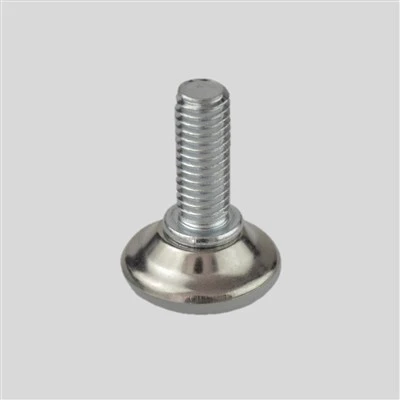
Let’s start with the basics so we’re all on the same page. Metal threaded inserts aren’t just random screws shoved into a hole. They’re threaded fasteners designed to lock into a metal base (think aluminum, steel, brass, even magnesium) so you can attach another component without stripping the base’s threads. The “maximum load capacity” here isn’t a single magic number – it’s a range, and it depends on way more than the insert itself. I’ve seen a customer put a tiny M3 insert into 0.5mm thick aluminum and pull it right out when they tried to bolt on a bracket, while another used an M6 insert in 10mm thick steel and crushed the insert’s body because they over-torqued it. So let’s break this down like we’re chatting over a coffee, not reading a engineering textbook.
First up: the two big load types everyone cares about. Tensile load is pulling the insert straight out of the metal, like if you have a bolt holding a bumper on and someone yanks the bumper forward. Shear load is sliding the insert sideways, like when you bolt two metal plates together and torque a third part that twists them slightly. These are totally different, and your maximum load will be way higher in shear than tensile – I see so many people mix these up and get burned.
Now, what actually determines that number? Let’s go through the factors that make or break an insert’s load capacity, because this is where the “it depends” part comes in, and why you can’t just Google a number for M5 inserts and call it a day.
-
The metal base material. This is non-negotiable. Inserting a threaded insert into mild steel is way different than using it in 6061 aluminum (the go-to for most automotive and aerospace parts). 6061 has a tensile strength around 31,000 PSI, while 1018 mild steel is like 43,000 PSI – so steel will hold way more load. Even within aluminum, 7075 is way stronger than 6061, so your load capacity jumps up. I once had a customer come to me panicking because their insert failed in a 7075 housing; turns out they used the same insert spec they’d used for cheap 6065 housings, and it wasn’t rated for the higher strength metal. Also, thickness of the base matters. If your metal is thinner than 3x the insert’s outer diameter, you’re cutting capacity drastically. A 10mm OD insert in 2mm aluminum? Forget hitting the published max – that’s a guaranteed pull-out.
-
The insert type and material. Not all metal threaded inserts are created equal. We supply three main types for metal, and each has totally different load numbers. Press-fit inserts (also called drive-in inserts) are the most common for high-volume manufacturing – you hammer or press them into a pre-drilled hole, their external knurls or ribs bite into the metal. Then there’s threaded inserts with integral locking features, like those with a nylon insert or a serrated body, that prevent rotation. And finally, weld-in inserts, which are welded directly to the metal base for super heavy-duty applications. For load capacity, weld-in inserts win hands down – they can handle thousands of pounds of tensile load, way more than press-fit ones. We once supplied a weld-in M10 insert for a heavy equipment customer that held 1,200 lbs of tensile load, while a standard press-fit M10 of the same material tops out around 800 lbs max. Also, insert material: steel inserts are stronger than brass, which are stronger than aluminum inserts. Unless you’re dealing with corrosion, stick to steel for high load.
-
Installation quality. This is the part most people skip, and it’s the #1 reason inserts fail before they hit max load. If you’re a machinist, don’t drill the hole too big or too small. Drill a hole that’s 0.002mm under the insert’s outer diameter for press-fit, that lets the knurls bite deep. Over-torquing when installing a threaded insert that’s tapped in (not press-fit) will strip the insert’s internal threads or crack the metal base. Under-torquing and the insert will spin. We get calls every week from people who installed 100 inserts, 20 of them failed because the installer jammed them in with a air hammer instead of using a hydraulic press at the right speed. I always tell our customers: follow our installation torque specs to the letter, or forget the max load number entirely.
Now, let’s get to the numbers that actually matter. Let’s use real examples from our supply catalog, not the generic stuff you’ll find on Amazon. For press-fit steel inserts (our most popular line), here’s the sweet spot for common sizes in 10mm thick 6061 aluminum (the most common metal for general use):
- M3: Tensile load max ~180 lbs, Shear load max ~270 lbs
- M5: Tensile load max ~450 lbs, Shear load max ~700 lbs
- M8: Tensile load max ~850 lbs, Shear load max ~1,300 lbs
Wait, that’s for average installation. If you use hydraulic press and perfect hole sizing, you can push those numbers 10-15% higher, no problem. For weld-in steel inserts, same M5 size? Tensile load jumps to over 1,200 lbs, shear to 1,800 lbs. That’s the big difference when you need heavy duty.
But here’s the catch: these are maximum numbers for new, brand new inserts in perfect condition. If you’re dealing with vibration (like in a car engine or farm equipment), you’ll want to derate that number by 20-30% to account for loosening over time. We supply locking threaded inserts for vibration-heavy applications, which let you hit closer to the published max without worrying about rotation.
Let’s talk about common mistakes I see all the time, because these are the ones that get people in trouble. First, using a stainless steel insert in a marine application. Stainless is good, but if you’re in salt water, brass inserts actually handle corrosion better, but their load capacity is lower. So you have to balance corrosion resistance and load needs. Second, over-sizing the insert to get higher load. An M8 insert in thin 3mm aluminum will still pull out because the metal isn’t thick enough, no matter how big the insert is. Third, ignoring thread engagement. You need at least 2x the insert’s internal thread depth. So for an M5 insert (internal thread depth ~8mm), you need the bolt to engage at least 16mm into the insert. Skip that, and the bolt will snap before the insert fails.
Another myth I want to bust: the published max load from some cheap overseas suppliers is a lie. We get people all the time asking why our M8 insert is rated for 850 lbs tensile and another supplier’s is 1,200 lbs. That’s because they’re testing the insert alone, not with a real metal base. Their “max load” is the insert’s own tensile strength, not how it performs in your actual part. We test every single batch of our inserts in real metal (6061 aluminum, 1018 steel) in our in-house lab, so our numbers are real – we’ve seen every failure scenario, so we don’t fudge specs.
Wait, what about when you need to reuse the insert? That’s a whole other question. If you torque a bolt into an insert and take it out, you lose some grip. For press-fit inserts, you can reuse them 2-3 times max, no problem, before the knurls start wearing down. Weld-in inserts? Way more durable, you can reuse them 5+ times, perfect for prototyping.
So, what should you actually do when you need to find the max load for your application? Don’t guess. First, figure out your metal base: material, thickness, alloy. Then decide if you need tensile or shear load, and any environmental factors (vibration, corrosion). Then reach out to a supplier that actually knows their stuff – not a generic parts seller. We don’t just send you a spec sheet; we’ll walk you through whether an M5 press-fit is enough for your bracket, or if you need to step up to M6, or switch to a weld-in for that heavy load.
If you’re working on a new project, don’t wait until you’re prototyping to test inserts. We can send sample inserts, and our team will help you run quick pull tests to confirm the load capacity. I’ve seen so many projects get delayed because someone ordered the wrong insert, and now they have to re-machine 100 parts at a huge cost.
At the end of the day, the maximum load capacity of metal threaded inserts isn’t a static number – it’s a calculation of your specific part, material, installation, and environment. The generic online numbers are a starting point, but the real max that won’t let you down is something you get by working with someone who’s actually in the game, testing inserts in real conditions, not just copying specs from a website.

If you’re dealing with a project and need to make sure your threaded inserts can handle the load, hit us up. We’ll send over accurate, tested specs, answer all your questions, and even help you pick the right insert for your exact application, no confusing jargon, no hidden fees.
Caster References:
- Industrial Fasteners Institute. (2022). Threaded Insert Design and Application Guide. Industrial Fasteners Institute.
- Machining Data Handbook. (2021). Threaded Insert Installation and Load Capacity. Society of Manufacturing Engineers.
- ASTM F2061-21. Standard Specification for Threaded Inserts for Metallic Materials. ASTM International.
- Aluminum Association. (2020). Load Capacity of Threaded Inserts in Aluminum Alloys. Aluminum Association.
Bai Ye Industrial Co., Ltd.
With abundant experience, we are one of the most professional threaded inserts for metal manufacturers and suppliers. We warmly welcome you to buy discount threaded inserts for metal for sale here from our factory. All customized products are with high quality and low price. Contact us for quotation.
Address: No.178, Sec. 2, Zhangyuan Rd., Huatan Township, Changhua County 503, Taiwan (R.O.C.)
E-mail: judy@ku-ping.com.tw
WebSite: https://www.baiyemfg.com/
