As a parts processing supplier with over a decade of experience, I’ve seen the industry shift dramatically in that time—from a mix of manual work and basic semi-automated equipment to the fully automated systems that dominate our shop floors today. When customers first ask me why I invested so heavily in automation back in 2017, I used to reel off a list of numbers: faster turnaround, fewer errors, lower costs. Now, after working hands-on with our automated lines, I can tell you it’s not just about metrics. It’s about what we can offer our clients that manual processing can’t—consistency, reliability, and the kind of scalability that small businesses and large manufacturers both need to survive. Parts Processing

Let’s start with the basics: precision. When a machinist is hunched over a lathe for eight hours straight, it’s natural for small variations to creep in. A fraction of a millimeter here, a slight tilt there. Over a long run, those variations add up, and suddenly a batch of parts that’s supposed to fit a specific assembly is off. With automated parts processing, every tool path is programmed once and repeated exactly, every cut is measured with sensor-guided tools in real time, and every part comes out within tolerances that would be impossible to hit manually. Last quarter, we had a client in the aerospace sector who’d been rejecting 12% of their manually processed parts because of tolerance drift. We swapped their order to our automated line, and the rejection rate dropped to 0.3%. That’s not just a win for us—it’s a win for them, because they don’t have to scrap inventory, delay shipments, or deal with the cost of reworking parts.
That precision also translates to consistency across orders. A bakery might adjust their recipe slightly each day based on how active they are, but when a car manufacturer needs 50,000 identical brake calipers for a new model, every single one has to work the same. Manual processing can’t match that consistency; even the most skilled machinist will have a “good run” one day and a slow, error-prone day the next. Our automated systems don’t have good days or bad days—they run the same process 24/7, 365 days a year (with scheduled maintenance, of course), and every part leaves our facility identical to the last. For our clients, that means no surprises when they assemble their products. No last-minute checks to make sure parts fit, no rush to reorder because a batch was off. It’s a level of reliability that’s non-negotiable in today’s fast-paced manufacturing world.
Then there’s speed. When we take on a large order, say 100,000 small gears for a medical device company, manual processing would take our team of five machinists at least two weeks to complete—working around the clock. With our automated lines, that same order takes 48 hours. But it’s not just about faster turnaround for big orders. Automation lets us handle small, custom runs without the kind of setup time that used to kill profitability for small batches. Back when we only had manual equipment, setting up a custom order could take a full day: adjusting tools, calibrating machines, training a machinist on a new design. Now, we upload the CAD file to our automated system, press a button, and the line is ready to go in under two hours. That means we can take on smaller, more frequent orders without charging exorbitant setup fees—and our clients love that. A startup that needs 500 custom parts to test a prototype doesn’t have to choose between quality and affordability anymore.
Of course, speed and precision would mean nothing if automation led to higher costs, but that’s not the case. In fact, automated parts processing often cuts costs for everyone involved. For us, the biggest cost saver is labor. We used to need a large team of skilled machinists, each earning a premium wage because of their expertise. Now, our automated lines require just a handful of technicians to monitor the equipment, make minor adjustments, and handle quality checks. That lets us keep our prices competitive, even as we invest in better tools. For our clients, the cost savings come from less waste. Manual processing generates a lot of scrap parts—parts that are cut wrong, damaged during handling, or rejected for tolerance issues. Our automated systems use materials more efficiently: they optimize the placement of parts on raw stock to minimize waste, and sensors catch errors before a part is ruined. We’ve cut our material waste rate by 40% since we fully automated, and we pass a portion of those savings on to our customers.
Another advantage that people don’t talk about as much is safety. Manufacturing jobs are among the most dangerous in the world, with machinists at risk of cuts, burns, and repetitive stress injuries from operating heavy machinery all day. When we installed our automated lines, we moved most of our hands-on work out of the “danger zone” where parts are being cut, drilled, or shaped. Now, our technicians work at control panels, monitoring the process from a safe distance. We’ve had zero recordable safety incidents related to our automated lines in the past five years, compared to an average of two per year with our manual equipment. That means less downtime for our team, lower workers’ comp costs, and a safer workplace for everyone—and our clients value that too. A reliable, safe supplier is less likely to experience unexpected shutdowns that delay their orders.
Scalability is another game-changer. As a parts processing supplier, we work with clients ranging from small startups to Fortune 500 companies, and their needs can swing wildly—one month a startup needs 1,000 parts, the next month a multinational needs 200,000. With manual equipment, scaling up or down means hiring and training more machinists, or laying off workers when demand drops. That’s not only disruptive for our team but also risky for our clients, who might have to wait weeks for us to ramp up. Our automated lines, though, let us adjust output quickly. We can add an extra shift on an automated line without needing to hire dozens of new workers, and we can dial back production during slow times without major layoffs. Last year, a client in the agricultural sector had a surge in demand for their tractors, and they needed 30% more parts than they’d originally ordered in two weeks. We were able to reallocate resources on our automated lines and deliver the extra parts on time—something we couldn’t have done with manual processing.
Wait, but I should be honest here—automation isn’t perfect. There are upfront costs: we spent nearly $2 million to install our first fully automated line, and that’s a big investment. There’s also learning curve: our technicians had to go through months of training to operate and maintain the new equipment, and we had some early teething problems where a software glitch caused a batch of parts to be rejected. But those teething problems are minimal compared to the long-term benefits. Over time, the reduced labor costs, less waste, and faster turnaround add up to a return on investment that’s worth every penny. And when we work with clients who have special needs—like parts with complex geometries or tight tolerance requirements—automation is the only way we can deliver what they need. Manual machinists can’t cut the kind of intricate parts that go into things like semiconductor equipment or electric vehicle batteries; automated systems can, and do, every day.
I think the biggest misconception about automated parts processing is that it replaces human workers. In reality, it changes what human workers do. Our team isn’t just standing around watching machines—we’re solving problems, optimizing processes, and collaborating with clients to design parts that are easier to process without sacrificing quality. Last year, a client in the medical device sector came to us with a part that was costing them a fortune to process manually. Our automated team worked with their engineers to adjust the design slightly, making it compatible with our line, and we cut their processing cost by 25% while improving the part’s performance. That’s the kind of value we can deliver that a machine never could—because we’re not just a processor; we’re a partner.
For our clients, the choice to work with an automated parts processor isn’t just about keeping up with trends. It’s about getting a product that’s more reliable, more consistent, and more cost-effective. It’s about being able to meet tight deadlines without compromising quality, and scaling up or down as their business needs change. I’ve seen too many clients stick with manual processing because they think it’s cheaper, only to deal with delays, rejected parts, and rising costs down the line. When they switch to automation, they tell me it’s one of the best decisions they’ve made.
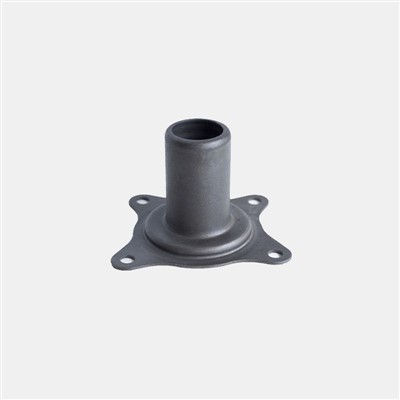
If you’re a manufacturer, startup, or engineer looking for a parts processing supplier that can deliver precision, speed, and reliability, we’re here to help. We work with a wide range of industries, from aerospace and medical devices to automotive and consumer electronics, and our automated lines are equipped to handle both simple and complex parts. We can walk you through the process, answer any questions you have about tolerance requirements, turnaround times, or cost savings, and help you find the right solution for your project. Don’t let inconsistent, slow manual processing hold your business back—reach out to us to discuss your parts processing needs today.
Automotive Parts References
- "The Impact of Automation on Manufacturing Efficiency and Quality," Society of Manufacturing Engineers, 2022.
- "Automated Precision: Reducing Waste in Parts Processing," International Journal of Production Research, Vol. 59, No. 12, 2021.
- "Workplace Safety in Automated Manufacturing Facilities," Occupational Safety and Health Administration, 2020.
- "Scalability in Custom Parts Production: The Role of Automation," Journal of Small Business Manufacturing, Vol. 18, No. 3, 2023.
Taizhou Liuhuan Machinery Co., Ltd.
As one of the most professional parts processing manufacturers and suppliers in China, we’re featured by quality products and good service. Please rest assured to buy customized parts processing made in China here from our factory. For quotation, contact us now.
Address: Xinyuan Industrial Zone, Damaiyu Street, Yuhuan City, Zhejiang Province,China
E-mail: tzlhmachining@gmail.com
WebSite: https://www.tzlhmachining.com/
