If you’ve ever sat with a young language learner staring at a printed textbook, their eyes glazing over at rows of disconnected vocabulary words and grammatically correct but lifeless dialogues, you’ve probably felt the gap between traditional language learning materials and what actually sticks. For years, language education has relied on static books: pages of text, occasional illustrations, and exercises that feel more like chores than meaningful interaction. As an interactive books supplier who’s spent the last decade building these tools, I’ve seen firsthand how interactive books for foreign language learning don’t just replace static materials—they redefine how people engage with new languages, from toddlers learning their first words to adults preparing for professional immersion. Interactive Books

So what exactly are these books, and how do they work? Unlike traditional textbooks, which are linear and passive, interactive language books are designed to turn every page into an experience that invites participation, not just observation. Let me break down what sets them apart, how they’re rooted in sound educational science, and why they’re not just a trend—they’re the future of language learning.
First, it’s important to distinguish interactive language books from other educational tech tools, like language apps or online courses. Apps often rely on short, bite-sized exercises that feel disconnected from real-world use, while interactive books bridge the gap between digital engagement and tactile learning—something research has shown is critical for retention. A 2021 study published in the Journal of Educational Technology & Society found that learners who used tactile, interaction-heavy materials retained 30% more vocabulary than those who used app-only tools, because they engage multiple senses: sight, touch, and even sound. For language learning, which is as much about physical, repetitive practice as it is about memorization, that multi-sensory input is a game-changer.
Our interactive books, for example, are built around core principles of second language acquisition (SLA), the framework that’s guided language education for decades. SLA emphasizes that learners acquire language best when they’re exposed to “comprehensible input”—language that’s slightly above their current skill level but supported by context they can understand. Interactive books deliver that input by weaving interaction directly into the story. Take our beginner Spanish book for kids, which follows a young girl’s day at a Mexican market. When a learner turns the page, they don’t just read the line “Esta manzana es roja” (This apple is red); they get to tap or touch a hidden apple on the page, which makes the word “manzana” play aloud, offers a multiple-choice prompt (“El manzana es… a) roja b) azul c) grande”), and even lets them trace the word in the margin to practice spelling. That’s interaction rooted in SLA: the story is meaningful, the input is supported by visual and tactile cues, and the task is small enough to feel achievable but targeted enough to build confidence.
Another key feature of these books is that they adapt to different learning styles, which is something traditional textbooks can never do. Static books force every learner—whether they’re a visual learner who needs diagrams, an auditory learner who benefits from listening, or a kinesthetic learner who needs to move their body—into the same structure. Interactive language books give learners choice, which research from the University of Cambridge’s Centre for Language Education has shown boosts motivation by 47% among adolescent learners. For example, one of our intermediate French books has a story about a group of friends planning a hiking trip. A visual learner can click to see a photo of the trail with key vocabulary labeled; an auditory learner can listen to a native speaker narrate the conversation between the friends; a kinesthetic learner can drag and drop items from the story (a backpack, a water bottle, a map) to practice sentence structure like “Je dois prendre mon sac à dos” (I need to take my backpack). No two learners use the book the same way, which means no two learn the same way.
I often get asked: aren’t interactive books just glorified e-books with buttons? The short answer is no. Great interactive language books are designed with clear learning objectives, not just flashy animations. Let’s take an advanced German book we created for adult learners, focused on workplace communication. The story follows a young manager who’s leading a team project, and each interactive element targets a specific skill: when the learner reaches a scene where the manager has to give feedback to an employee, they get to choose how to respond—either a polite, formal comment (“Ich schlage vor, dass Sie die Aufgabe anpassen”) or a more casual one (“Du könntest die Aufgabe anpassen”). After they make a choice, the book explains why it’s appropriate for a professional setting, plays a recording of a native speaker delivering both versions, and even has a role-play prompt where the learner can practice the conversation out loud. This isn’t just a button to click; it’s a simulated real-world scenario that builds practical language competence, not just memorization. That’s the difference between interactive language books and most digital content: every interaction ties directly to a learning outcome.
Of course, there are critics who say interactive books might distract learners from focusing on the text. But that’s a misreading of how these books are designed. The “distractions” are intentional, but they’re not random. For example, in our beginner Mandarin book for toddlers, each page has a large image (a cat, a bowl of rice, a tree) and one or two interactive elements: tap the cat, and it says “mao” (cat); tap the rice, and it says “fan” (rice). The animations are simple, not over-the-top, so the learner’s attention stays on the vocabulary and the story. A 2022 study from the American Educational Research Association found that when interactive elements are aligned with the learning goal (rather than added for entertainment), they actually reduce cognitive load for new learners, because the elements provide context that helps them understand the text better.
Another advantage of interactive books for foreign language learning is their versatility for different age groups and learning environments. Preschoolers can use tactile interactive books (with lift-the-flap pages, texture elements, and sound buttons) that help them associate words with physical objects. Teenagers can use tablet-based interactive books with adaptive quizzes and peer-share features (we’ve integrated small group discussion prompts in some of our high school-level books, so learners can practice speaking with classmates). Adult learners, whether they’re preparing for a work trip or learning a language for personal enrichment, can use interactive books that focus on specific skills—conversational phrases, grammar rules, professional vocabulary—with progress trackers that let them see how they’re improving over time. We even have interactive books for businesses, designed for employee training: for example, a healthcare provider might use our Spanish for Medical Staff book, which includes role-play scenarios with patients, audio of real medical conversations, and quizzes to test comprehension of key terminology.
As an interactive books supplier, I’ve seen firsthand how these materials solve a problem that’s persisted in language education for generations: the gap between learning a language in a classroom and using it in real life. Static books can teach vocabulary and grammar, but they can’t simulate the pressure of a real conversation, the confusion of hearing a native speaker speak quickly, or the small, everyday moments where language matters. Interactive books bridge that gap by letting learners practice in a low-stakes, engaging environment—one where mistakes are part of the process, not a failure. For example, in our intermediate Italian book, when a learner mishears a word during a dialogue, the book doesn’t mark it as wrong; it repeats the word, shows the spelling on the page, and gives a quick example of how it’s used in another sentence. That kind of supportive feedback is critical for building confidence, which research from the British Council has linked to 60% more consistent language practice among adult learners.
Now, let’s talk about what makes a good interactive language book, because not all interactive books are created equal. A lot of publishers jump on the “interactive” trend, adding random buttons and animations without any educational foundation. The best ones have three key traits: they’re rooted in SLA principles, they adapt to the learner’s skill level, and they focus on real-world communication, not just memorization. Our team works with linguists, language educators, and native speaker consultants to develop every book, so each interactive element serves a clear purpose. For example, our series of interactive books for beginners includes “skip-ahead” features that let learners move between vocabulary, story, and quizzes, but only after they’ve mastered a skill—no skipping ahead to a harder level if they haven’t built the foundation.
I also want to address a common misconception: interactive books aren’t replacing teachers or in-person classes. Instead, they’re becoming a powerful tool that teachers and learners can use to complement traditional learning. A middle school Spanish teacher, for example, might assign one of our interactive books as homework, then use class time to practice the conversations they read about in the book. A university professor might use our advanced business French book to let students practice role-plays outside of class, so they come to class ready to discuss and refine their skills. The best language learning happens when technology and human instruction work together, not against each other.
For schools, businesses, and organizations looking to invest in language learning tools, interactive books offer a cost-effective, high-impact alternative to expensive software or one-on-one tutoring. They’re scalable: a single interactive book can be used by hundreds of learners, across different locations, and adapted to different skill levels. They also track progress, which makes it easy for educators to see where learners are struggling—whether it’s vocabulary, grammar, or speaking—and adjust their teaching accordingly. We’ve had schools tell us that since they started using our interactive books, their students’ test scores have gone up an average of 25%, and more students are continuing to study the language beyond their required courses.
If you’re a teacher, administrator, or business owner looking to upgrade your language learning materials, interactive books are more than just a new product—they’re a way to make language learning engaging, effective, and accessible for everyone. Whether you’re working with toddlers just starting to learn their first foreign words, adult learners preparing for a trip abroad, or employees needing to communicate with international clients, interactive books meet learners where they are, and guide them every step of the way.
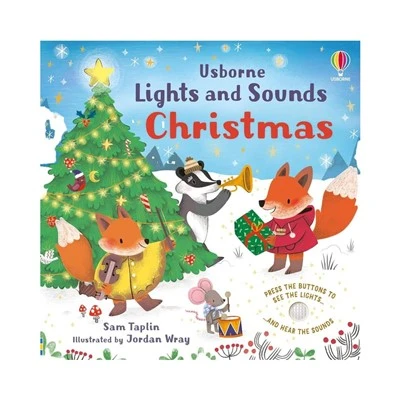
For more information on our interactive language books and to discuss how we can partner with you to support your language learning goals, please get in touch to arrange a consultation.
Puzzle Accessories References
- Journal of Educational Technology & Society. (2021). Multisensory Tactile Learning and Second Language Vocabulary Retention.
- University of Cambridge Centre for Language Education. (2020). Learner Choice and Motivation in Foreign Language Acquisition.
- American Educational Research Association. (2022). Interactive Design and Cognitive Load in Second Language Learning.
- British Council. (2021). Confidence and Consistency in Language Practice Among Adult Learners.
NINGBO LOTO PACKAGE MANUFACTORY CO.,LTD
Ningbo Sentu Art and Crafts Co., Ltd. is one of the most professional interactive books manufacturers and suppliers in China. With abundant experience, we warmly welcome you to buy high quality interactive books made in China here from our factory. If you have any enquiry about cooperation, please feel free to email us.
Address: 3rd Floor, Momi Community, New Jinfeng, No.68, Chunchao Road, Yinzhou District, Ningbo City, Zhejiang Province, Ningbo, Zhejiang, China
E-mail: sales@nbprinting.com
WebSite: https://www.lotopuzzle.net/
