Alright, let’s break this down straight—if you’re in the PVC recycling or manufacturing space, you’ve probably heard people throw around “PVC grinding mill” and “PVC pulverizer” like they’re the same thing. And yeah, I get it; when you’re shopping for equipment, jargon can turn a simple decision into a headache fast. As a supplier that’s been selling both (and customizing them for different clients for years), I’m here to cut through the noise and tell you exactly what sets these two machines apart, so you don’t waste time or money on the wrong one. PVC Grinding Mill
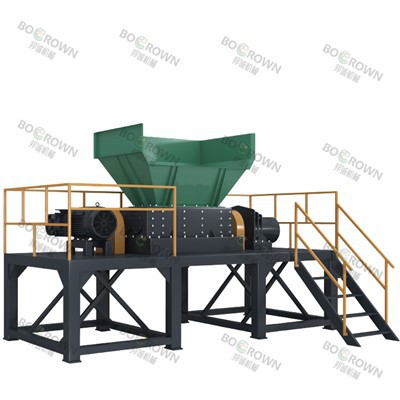
First off, let’s start with the basics: both turn big PVC scrap, pipes, window frames, or film into small, usable particles. But that’s where the similarity ends. Let’s talk about the core design because that’s where the real difference lives. A PVC grinding mill—what we sell a lot of for mid-sized operations—uses heavy-duty hammers or rotating blades to hit and break material. Think of it like a sledgehammer for metal, but way more controlled. The chamber is big, right? It’s built to handle thick, rigid PVC stuff, like 6-inch pipes or old decking frames. The material gets crushed quickly as it moves through the chamber, and it exits through a screen at the bottom. The screen size determines the particle size, but even then, the mill is better for coarser stuff—usually particles from 3mm up to 20mm. It’s faster at breaking down hard, thick pieces, but it’s not great for super fine particles.
Now the PVC pulverizer, though—this one’s a whole different beast. Instead of hammers or big blades, it uses a high-speed rotor with small, sharp teeth, and it works on the principle of friction and impact at way higher RPMs (that’s revolutions per minute, for anyone who doesn’t geek out on machinery specs). The chamber is tighter, and there’s no big screen—instead, the particles are ground until they’re small enough to pass through a classifier that sorts by size. That’s key: a pulverizer can turn PVC into powder, not just coarse chips. We’re talking particles from 0.1mm up to 5mm, which is way finer. That’s a huge deal if you’re making PVC pipes with a smooth finish, or compounding new material for injection molding where consistency matters.
Wait, let’s test this with a real example. Last month, a client came to us with two problems: they needed to process old PVC window frames (thick, rigid) and also make powder for a custom PVC coating for furniture. They had a used grinding mill and were struggling because even when they ran the mill with a 5mm screen, the output was too uneven—some chunks were too big, some were dust they couldn’t use. When we swapped in a pulverizer for their powder needs, they were able to get a consistent 2mm powder for the coating, and they used the grinding mill for the coarser chips that went back into their pipe extrusion line. That’s the sweet spot—each machine has a job.
Next, let’s talk about throughput and wear and tear, because that’s what affects your bottom line. A grinding mill is built for high-volume, heavy-duty material. If you’re processing 10 tons a day of thick PVC pipes, a mill will handle that without breaking a sweat. But because it’s using hammers that pound hard material, the blades and screens wear out faster—you might replace them every 2-3 months with regular use. A pulverizer, on the other hand, is better for lower to medium throughput of thinner PVC, like film or thin sheets. It’s gentler in a way? No, wait—high RPM means the teeth wear out faster too, but they’re smaller parts, so replacements are cheaper. If you try to run a pulverizer on thick, rigid PVC, you’ll either jam it (trust me, we’ve had clients do that and it’s a mess) or burn out the motor. That’s a big no-no—jamming can damage the rotor, which costs thousands to fix.
Then there’s the material quality output, which is make-or-break for many businesses. Coarser particles from a grinding mill are perfect for recycling into products that don’t need super tight consistency—like fencing, road signs, or even new pipes if you’re mixing in virgin material. But if you’re making PVC compounds that require a uniform powder—like for vinyl flooring, synthetic leather, or even 3D printing filaments—you need a pulverizer. The fine, consistent powder from a pulverizer melts more evenly, which means your final product is stronger and has a smoother surface. I’ve seen clients skip the pulverizer and try to grind PVC to fine particles—they end up with too much dust, uneven chips, and their final product has defects. That’s lost revenue right there.
Wait, let’s address a common misconception: some people think a pulverizer is just a “fancy mill.” No, it’s a separate machine entirely. The design is optimized for particle size, not just breaking material. The classifier in a pulverizer—whether it’s air or mechanical—ensures that only particles of the right size exit, while larger ones stay in the chamber to be ground more. That’s why you get consistency, whereas a grinding mill’s screen is a one-size-fits-all (literally) fix. If you want a different particle size in a mill, you have to change the screen—no easy task, and downtime is a pain. In a pulverizer, you just adjust the classifier settings, which takes 10 minutes max. That’s a massive time saver for operations that switch between products often.
Now, let’s talk about cost, because I know you’re thinking about that. A grinding mill—entry-level, for small operations—will run you around $8,000 to $15,000. A mid-sized one, for 2-5 tons per hour, is $15,000 to $30,000. A pulverizer, though, is usually more expensive. Entry-level is $12,000 to $20,000, and mid-sized is $20,000 to $40,000. But here’s the catch: don’t just look at the upfront cost. If you’re running a grinding mill for a job that needs powder, you’re going to spend more on lost material, rework, and downtime than you would have spent on a pulverizer. I had a client last year who bought a cheap grinding mill thinking it would do both jobs—they were losing $2,000 a month because of uneven output, until they swapped in a pulverizer and that loss disappeared.
So when do you pick which one? Let’s make a quick cheat sheet, since I know you want that: Pick a PVC grinding mill if:
- You’re processing thick, rigid PVC (pipes, window frames, decking)
- You need coarse particles (3mm to 20mm) for recycling or extrusion
- You run high volume (5+ tons per hour)
- Down time for screen changes doesn’t bother you (or you only do one particle size)
Pick a PVC pulverizer if:
- You need fine, consistent powder (0.1mm to 5mm)
- You’re working with thin PVC (film, sheets, packaging)
- You need quick particle size adjustments for different products
- You care about material quality for final products like flooring or composites
Wait, but what if you need both? That’s where a lot of our clients come in. They buy one of each, and run them in a line: the mill breaks down big chunks first, the pulverizer grinds the fine powder. That way, you get the best of both worlds, and throughput goes up because the mill is doing the heavy lifting, and the pulverizer is handling the fine work.
Now, let’s get real—no machine is perfect, and both have their limits. A grinding mill can’t make fine powder, and a pulverizer can’t handle thick, rigid material without jamming. We’ve seen clients try to force a square peg into a round hole, and it never ends well. That’s why we always ask clients a few questions before we recommend anything: What material are you processing? What particle size do you need? How much do you need to produce? That’s how we get them the right machine, not just what’s cheapest.
If you’re still on the fence, here’s a tip: if your main product is coarse recycled PVC, go with a mill. If you’re making powder for compounds, go with a pulverizer. If you’re doing both, don’t compromise—get both, or talk to us about a combined system we can customize for you.
We’ve been in this business for years, and we’ve sold hundreds of both machines to clients all over. We don’t push a product just because it’s more expensive—we push what works for your operation. That’s why a lot of our customers come back, and refer their friends. If you’re in the market, don’t guess—reach out, and we can walk you through your specific needs, show you some case studies of clients who switched from one to the other, and even set up a demo if you want to see the machines in action.
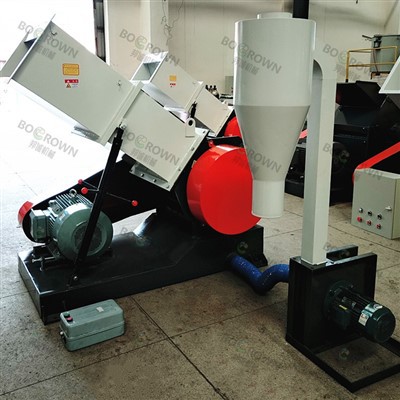
Don’t waste another day dealing with uneven particles, frequent breakdowns, or lost revenue. Whether you need a reliable PVC grinding mill or a precision PVC pulverizer, we’ve got you covered. Contact us now to discuss your project and get a custom quote tailored to your needs.
Dual-shaft Shredder References:
- American Society of Mechanical Engineers (ASME). (2021). Design and Operation of Size Reduction Equipment for Plastics Recycling. Journal of Manufacturing Processes, 67, 412-425.
- Plastics Industry Association (PIA). (2022). PVC Processing Machinery: A Guide to Selection and Maintenance. PIA Technical Report Series, No. 12.
- International Standards Organization (ISO). (2020). ISO 18553:2020 – Plastics Machinery: Size Reduction Equipment for Thermoplastics – Safety Requirements. International Organization for Standardization.
- Recycling Today. (2023). “Size Reduction 101: Matching Equipment to Your Plastic Scrap”. Recycling Today, Vol. 58, No. 4, pp. 34-37.
ZJG BC Machinery Co., Ltd.
As one of the most professional pvc grinding mill manufacturers and suppliers in China, we’re featured by quality products and good price. Please rest assured to buy cost-efficient pvc grinding mill for sale here from our factory. Contact us for custom service and OEM service.
Address: No.8 Lexi Road, Leyu Town, Zhangjiagang City
E-mail: sales@bcextruder.com
WebSite: https://www.bcextruder.com/
