As a supplier specializing in multiple pieces packaging lines, I’ve spent the last decade working with food processors, pharmaceutical manufacturers, and e-commerce fulfillment teams to troubleshoot lines, adjust setups, and answer one question I get more than any other: “What’s the maximum weight your line can handle?” It’s not a simple answer—if you search generic equipment specs, you’ll see numbers like “up to 50 lbs” or “up to 500 lbs” but those don’t account for your specific product, packaging material, or line layout. Over time, I’ve learned to break this down beyond a single maximum number, because pushing a line beyond its safe, intended weight doesn’t just cause downtime—it can damage your product, waste packaging materials, and even create workplace hazards. Multiple Pieces Packaging Line
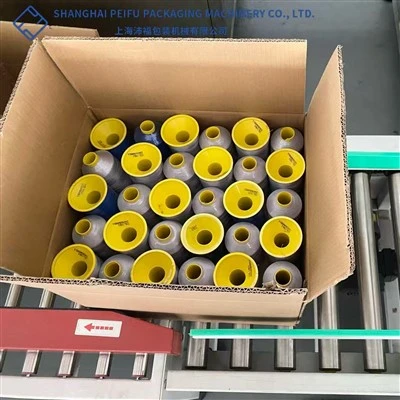
First, let’s start with the core design of a multiple pieces packaging line (MPPL) to ground this conversation. Unlike a single-piece packaging line that handles one item at a time, an MPPL groups 2, 5, 10, or even more items into a single package—think a case of 12 water bottles, a carton of 6 medication blister packs, or a bundle of 20 paper towels. Every part of the line is engineered to support that collective weight: from the conveyor belts that move the grouped items, to the carton erectors that form boxes, to the sealers that close them, and the palletizers that stack finished units for shipping.
Let’s talk about the factors that define the maximum safe weight, because they’re far more specific than a generic spec. The first is the line’s base power rating. Most standard MPPLs we manufacture run on 208V three-phase power, but heavier models for industrial use go up to 480V. A line designed for up to 100 lbs total group weight will have motors with 1.5–2 horsepower (HP) for conveyors and sealers, while a line built for 500 lbs will have 5–7.5 HP motors. The issue here is that underpowered motors will stall if you overload the line—we once worked with a craft brewery that tried to run 16 cans per pack on a line built for 12, and the conveyor motor burned out three times in a week. It wasn’t that the line couldn’t physically move more weight; the motor just couldn’t handle the extra load, and they had to replace it before adjusting their pack configuration.
Next, there’s the weight of the individual items and the packaging material itself. A lot of customers forget that the “maximum line weight” includes the product plus the box, tape, and any inserts like dividers or padding. For example, if you’re packaging 10 glass jars (each 1 lb) into a corrugated box that weighs 0.5 lbs, the total group weight is 10.5 lbs—but if those jars are 5 lbs each, that’s 50 lbs plus the box, totaling 50.5 lbs. A line rated for 50 lbs can’t handle that, even though the individual item weight is low. We recently had a pharmaceutical client who switched from glass to plastic vials to cut costs, only to realize their new line’s packaging material was 2 lbs heavier per group, pushing their total weight 12% over the line’s max. They thought the product weight was the only factor, but the packaging added enough to cause seal failures.
Then there’s the line’s structural components, especially the conveyor frames and rollers. Most standard MPPLs have aluminum or steel frames: aluminum is lighter and cheaper for smaller lines, while steel is sturdier for heavy loads. For a light-duty line (up to 150 lbs total group weight), aluminum frames work fine, but push that to 200 lbs, and aluminum will flex over time—eventually causing misalignment in the carton erector. Heavy-duty lines (300+ lbs) use 12-gauge steel frames and steel rollers, which can handle repeated heavy loads without warping. We once had a logging supply company that needed to bundle 8 1-foot lumber boards (each 3 lbs) plus a shrink wrap label, totaling 25 lbs per bundle. They used a light-duty aluminum line, and after six months, the conveyor frame bent so much that bundles were getting stuck 3 times a shift. We retrofitted them with a steel frame, and that issue disappeared.
It’s also important to distinguish between group weight (the total weight of items packed into one unit) and pallet load weight (the total weight of a full pallet of finished units). A common mistake customers make is confusing these two. For example, a line might handle a maximum group weight of 200 lbs, but the palletizer on the line is only rated for 1,500 lbs per pallet. If you fill each pallet with 7 groups at 200 lbs, that’s 1,400 lbs—safe, but if you try to add an 8th group, that’s 1,600 lbs, which exceeds the palletizer’s limit, leading to dropped pallets and damaged products. We always walk clients through this: the line’s component limits (conveyors, sealers, group weight) are separate from the end-of-line palletizer, so you have to align all of them.
Now, let’s talk about edge cases that most generic specs don’t mention. For example, fragile products like wine bottles or electronics can’t be handled at the same maximum weight as rigid products like canned goods. If you’re packaging 6 wine bottles into a crate, the total group weight might be 18 lbs, but a line built for that weight that uses fast, hard movements could jostle the bottles and cause breakage. So even if the weight is under the line’s physical limit, the product’s fragility means you need to lower the operating weight to a “soft max,” usually 75–80% of the official maximum. We worked with a winery that tried to run their wine crates at full 18 lbs, and they had a breakage rate of 8%—way higher than their 2% target. We adjusted the line’s conveyor speed and reduced the group weight to 14 lbs, and breakage dropped to 1.5%.
Another edge case: line speed. If you run a line faster, the motor and conveyor have less time to handle the weight, so the maximum safe weight goes down. A line rated for 400 lbs at 10 packs per minute (ppm) can only handle 320 lbs at 15 ppm, and 250 lbs at 20 ppm. We always ask clients what their line speed needs to be, because a lot of them fixate on maximum weight without considering speed. A food processor we work with wanted to run 12 cans per pack at 20 ppm, but their line’s base max was 350 lbs. Running at 20 ppm would mean they could only have 10 cans, but by adjusting their speed to 15 ppm, they could add 2 more cans, increasing productivity without overloading the line.
So, what’s the real answer to “What’s the maximum weight?” It’s not a single number—it’s a combination of your line’s design, product weight, packaging material, speed, and end-of-line equipment. For most standard multiple pieces packaging lines we supply, the range is between 50 lbs and 500 lbs total group weight, but that’s not a one-size-fits-all. Small lines for e-commerce, like those packing 10 small items (hand cream, lip balm) into a single box, often max out at 75 lbs. Medium lines for food processing, packing 12–24 canned goods, usually go up to 300 lbs. Heavy-duty industrial lines, for bundling lumber, industrial parts, or large containers, can handle up to 500 lbs, and we’ve built custom lines that go higher than that for specialized clients, like a military defense contractor that needed to pack 20 lbs of gear into a rugged crate.
But here’s the thing: even if your product and line fall within that range, pushing the limit is never a good idea. We see clients every quarter who ignore the max weight, end up with downtime, damaged products, or safety incidents. Last year, a snack food company tried to run 20 potato chip bags (each 0.5 lbs) into a 10 lb box on a line rated for 8 lbs. The conveyor belt stretched, and the sealers couldn’t close the boxes properly, leading to 1,200 damaged packages in one shift. That cost them $3,000 in product and downtime, which is way more than the cost of adjusting their pack size to stay within the line’s limit.
If you’re evaluating a multiple pieces packaging line for your business, don’t just ask for a maximum weight number. Bring your product samples, your packaging specs, your required line speed, and your end-of-line pallet details to the supplier. A good supplier will walk you through how each component works, adjust the line design to match your needs, and explain the trade-offs between weight, speed, and product safety. If you try to pick a line based on a generic spec without considering your specific setup, you’ll end up with a line that’s either underpowered for your needs, or too expensive for features you don’t use.

At the end of the day, the maximum weight a multiple pieces packaging line can handle is less about the equipment itself and more about how it fits your operation. It’s about balancing what you need to package, how fast you need to package it, and how reliably you need it to work. If you’re ready to find the right balance and stop worrying about line overloads or downtime, reach out to a packaging line supplier who can tailor a solution to your exact needs.
Sleeve Wrapping Machine and Heat Shrink Tunnel (1 Piece) References
- Packaging Machinery Manufacturers Institute (PMMI). "Multiple Pieces Packaging Line Design Standards." 2022.
- Corrugated Packaging Council. "Load Capacity Guidelines for Automated Packaging Equipment." 2021.
- Occupational Safety and Health Administration (OSHA). "Industrial Conveyor Safety Best Practices." 2020.
- Food and Drug Administration (FDA). "Packaging Equipment for Pharmaceutical and Food Products." 2023.
Shanghai Peifu Packaging Machinery Co., Ltd.
We are one of the leading manufacturers and suppliers of multiple pieces packaging line in China. With a professional production team, we are able to meet the needs of the majority of our customers. Please rest assured to buy customized multiple pieces packaging line from our factory.
Address: No.1111, Xinlin Road, Fengxian District, Shanghai, China
E-mail: cathychensupplier@gmail.com
WebSite: https://www.peifupackaging.com/
