Alright, let’s cut through the noise—transporting a cross cutting machine isn’t just grabbing a dolly and calling it a day. As someone who’s been supplying these bad boys for over 7 years, I’ve seen what happens when a rookie messes this up: a $15k blade cracked mid-move, a frame bent so bad it threw alignment off for 6 months, and one customer who had to rent a crane and a full service tech team just to get it working again. Today, I’m breaking this down like I do for my clients—no fancy jargon, just real steps that work, because these machines aren’t like moving a office chair. They’re heavy, precise, and if you skip a single step, you’re gonna be dealing with a headache way worse than a misaligned paper stack. Cross Cutting Machine

First off, let’s get one thing straight: cross cutting machines (we’re talking the industrial ones, not your desktop hobby model—those are a whole different nightmare) have two main components that make moving them tricky: the main cutting head (super fragile, has that sharp rotating blade and tiny sensors that don’t play rough) and the base frame (it’s solid steel, weighs anywhere from 800 lbs to 2,500 lbs depending on the size). I used to have a guy try to move our mid-sized model with a pickup truck and a rope—don’t be that guy. Trust me, I still get the panic call when he tried to turn onto a side street and the frame shifted sideways, scraping the guardrail and denting the side of the truck. Total no-go.
Step 1: Prep the machine before the moving day. This isn’t last-minute stuff. I usually tell my clients to book the move at LEAST 2 weeks out, so you have time to do this right. First, unplug everything—obv, but also, disconnect the air lines if it’s a pneumatic model (a lot of the newer ones use air to hold the cutting head in place, so leave those pressurized and you’ll have parts popping off mid-move). Next, secure the blade. Most cross cutting machines have a lock pin—look for that, and stick it through the blade’s arbor so it can’t spin. If yours doesn’t have a lock pin, you can wrap thick foam around the blade and tie it down with heavy-duty ratchet straps, but I always recommend calling your supplier (that’s me!) for the right pin—we keep a stock of them because so many people skip this. Then, disconnect all the wiring harnesses—label them! Write “sensor left” or “power main” on a piece of tape and stick it to each wire, because when you’re setting it up at the new place, you won’t remember which wire goes where. I can’t tell you how many times I’ve had to drive 2 hours just to untangle wires someone forgot to label.
Step 2: Figure out the right moving gear for the job. This is where most people waste money or cut corners. If your machine is under 1,500 lbs, a heavy-duty furniture dolly (rated for 2,000 lbs minimum) works, but only if you have a flat surface. If it’s over that, or you have to get it through a narrow doorway or up stairs? Ditch the dolly—get a set of industrial skates (they’re like small, heavy-duty wheels you slide under the frame) and a couple of guys who know how to lift with their legs, not their backs. Also, never use regular moving blankets—they’re too thin. Use heavy-duty rubberized moving blankets (the ones with a non-slip backing) to wrap the base and cutting head, so nothing scratches. And here’s a pro tip from my book: if you’re moving it on a truck, don’t just tie it down with ropes—use ratchet straps, and run them around the frame’s metal eyelets (not the wiring or the sensor mounts). I once saw a client use a strap on the control panel, and when they hit a pothole, the panel cracked right off. RIP that $2,000 touchscreen.
Step 3: The big move day—don’t rush this. The #1 mistake I see here is trying to move the machine in 10 minutes flat, like it’s a pizza box. First, clear the path. Measure every doorway, hallway, elevator, and stairwell before you touch the machine. I mean measure twice, write it down, and compare it to the machine’s dimensions (we give those to every client when they order, btw—for exactly this reason). Last month, a customer tried to move a 6ft-wide machine through a 5ft doorway and had to take the whole side panel off. That added 3 hours to the move, and they had to pay for a tech to put it back together. Not cool. Once the path is clear, lift the machine evenly. If you’re using skates, have one person at each corner—count to 3, lift just enough to slide the skates under. If you’re using a dolly, make sure the front wheels are locked, and that the machine is centered so it doesn’t tip. When you load it onto the truck, put heavy blocks under the base so it can’t slide, and pad the sides with those rubber blankets. If the new location is on a different floor, don’t use a regular elevator that’s only rated for 2,000 lbs—most cross cutting machines are heavier than that, so you’ll need a freight elevator, or even a small crane if it’s on the third floor. I had a client in Chicago who tried to use a regular elevator and got stuck for 2 hours—cost them a whole day of production, which is way more than the price of a freight elevator.
Wait, hold on—what if you’re moving it a really long distance, like cross-country? That’s a whole other beast, but the rules still apply: secure everything, use a enclosed truck (never an open flatbed—rain or dust will mess up the sensors), and make sure the driver knows this isn’t a regular load. A lot of moving companies see “industrial equipment” and just treat it like a box, so I always tell my clients to specify that it’s a precision cutting machine, not just a metal frame. We also have a few preferred freight companies that I trust, so if you need a rec, just hit me up.
And here’s the part that most people forget: after you move it, you can’t just plug it in and go. Wait at least 2 hours—any jostling can make oil or hydraulic fluid shift, so letting it settle prevents leaks. Then, do a quick check: make sure the blade is still locked, the sensors are all connected, and the frame is still level (use a small spirit level on the base—if it’s off even a degree, the cuts will be crooked). If you’re not sure, call me—my team can help over the phone, or if you’re local, we can send a tech out for a small fee. I don’t do surprise service charges, either—no hidden fees, just honest help.
I’ve been doing this for years, and the number one question I get is “can’t I just rent a moving truck and do this myself?” Sure, if you don’t care about your machine. But these cross cutting machines are investments—you spent good money on them, right? The last thing you want is to have to replace a blade or realign the head because you skipped a step. I once had a customer who saved $200 on moving and ended up paying $3,000 in repairs. That’s a no-brainer, right?
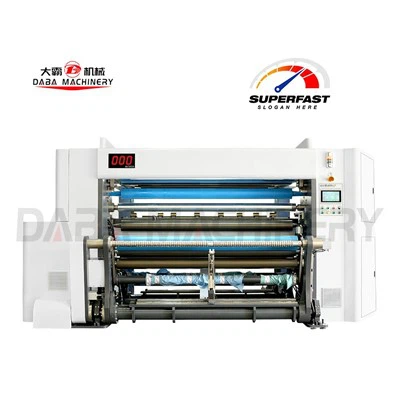
Look, I get it—you’re busy, you have a business to run, and moving equipment is just another thing on your to-do list. But when you work with us, we don’t just sell you a machine. We walk you through the moving process, we give you the tools you need, and we’re here if you mess up. We’ve helped hundreds of clients move their cross cutting machines without a single scratch, and that’s why they keep coming back.
Synchronous Belt Flexographic Printing Machine If you’re getting ready to move yours, or you just ordered a new one and are stressing about the move, hit me up. We can chat through the steps, give you specific tips for your machine, and even connect you with trusted movers. No sales pitch, no pressure—just real advice from someone who’s been in your shoes way too many times.
References
- Industrial Machinery Transport Best Practices, Material Handling Industry Association, 2022
- Cross Cutting Machine Installation & Maintenance Guidelines, Precision Converting Equipment Supplier Association, 2021
- Safe Lifting and Moving of Heavy Industrial Equipment, Occupational Safety and Health Administration (OSHA), 2023
- Freight Transport for Precision Industrial Machinery, National Machinery Movers Association, 2022
Wenzhou Daba Machinery Co., Ltd.
With abundant experience, we are one of the most professional cross cutting machine manufacturers and suppliers in China. We warmly welcome you to wholesale advanced cross cutting machine at competitive price from our factory. If you have any enquiry about cooperation, please feel free to email us.
Address: Qianbu Industrial Zone, Xincheng Street, Ruian City, Wenzhou, China.
E-mail: info1@dabamachinery.com
WebSite: https://www.dabaflexpack.com/
