Alright, let’s cut to the chase—if you’re in the plastics recycling game, your crushing equipment isn’t just a machine. It’s the backbone of how smoothly your whole operation runs, right? Let’s be real, I’ve spent 12 years selling plastic crushing gear, and I can’t tell you how many times a client’s “great deal” on a cheap crusher turned into a week of downtime because it couldn’t handle their PET bottles or HDPE scrap. So today, I’m breaking down the real, practical ways to evaluate if your crusher’s actually pulling its weight—no fluff, no textbook jargon, just what works on the factory floor. Plastic Crushing Equipment
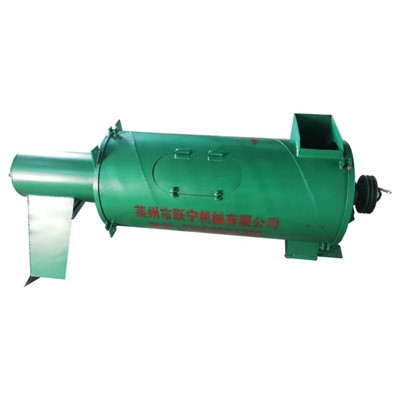
First off, let’s start with the thing that actually matters before you even turn the key: throughput. Wait, what’s throughput? It’s how much material the crusher can chomp through in an hour, but not just the number the sales rep throws at you. I’ve heard guys say “1,500 kg/h” like that’s a guarantee, but that’s only if you’re feeding perfectly sorted, uniform HDPE sheets. Throw in some tangled PET strapping, or a few hard nylon scraps, and that number drops faster than a hot potato. Here’s how to test it, for real: grab a sample of your exact, run-of-the-mill scrap—no pre-sorted “show material”—and feed it for 10 minutes, weigh what comes out, multiply by six. If you’re regularly hitting 80-90% of the rated throughput, that’s solid. If it’s at 50% or lower? That crusher’s undersized for your line, full stop. I once had a client who bought a crusher rated for their 1,000 kg/h target, but they were feeding mixed plastics with thick polypropylene lids—they never hit more than 400 kg/h, and lost 3 days a week to backups.
Next up, particle size consistency. This is huge because if your crushed plastic is all over the place—some big chunks, some tiny dust—your downstream processes (like washing, melting, or pelletizing) are gonna hate it. Think about it: if you’re making recycled plastic pellets, inconsistent particle size means uneven melting, which leads to weak final product and wasted material. How do you evaluate this? Get a set of test sieves (you can pick these up cheap online) and sift a sample of your output. For most recycling operations, you want at least 80% of the material to fall within a 5-20 mm range, depending on your needs. If you’re getting too many big chunks (over 25 mm), your blades are dull or the screen’s the wrong size. If you’re getting too much dust, you’re feeding material too fast, or the screen has too many small holes. I always tell clients: if your crushed material looks like it was put through a blender with a bad blade, don’t buy that crusher—no matter how cheap it is.
Then there’s blade performance and wear. Blades are the heart of a plastic crusher, plain and simple. A good set of blades can last for months, a bad set might need replacing every two weeks. Here’s what to check: first, what’re the blades made of? Most cheap crushers use low-grade steel that rusts or chips easily. The good ones use hardened tool steel, sometimes with a coating like chrome or titanium to resist abrasion. Second, how long do they last under your actual working conditions? I track this for every client—if you’re crushing abrasive material like fiberglass-reinforced plastic, blades should last at least 80 hours of run time. If they’re wearing down after 20 hours, that’s a red flag. Also, pay attention to how they crush without clogging. Clogging isn’t just annoying—it’s a sign the blades aren’t aligned right, or the gap between the rotor and the stator is off. A little clog once in a while is normal, but if it’s happening every 10 minutes, that crusher’s poorly built.
Wait, let’s not forget power consumption. This is a big one for operating costs. A crusher that uses 20% more electricity than it needs to is basically throwing money out the window every month. How to evaluate it? Just check your power meter before and after running the crusher for an hour with a consistent feed rate. Compare it to the motor’s rated power (usually printed on the motor itself). A well-designed crusher will use 80-90% of the motor’s rated power at peak load. If it’s drawing way less, it’s oversized for your operation (wasting money on a bigger motor than you need). If it’s drawing way more? It’s inefficient—probably because the blades are dull, or the rotor is misaligned, or the machine has too much friction. I had a client a few years back who was paying an extra $1,200 a month in electricity because their old crusher was so inefficient—switched to one of our mid-range models, and their power bill dropped by that exact amount. That’s the kind of win that adds up fast.
Downtime is another metric you can’t ignore. Let’s be real: every minute your crusher is down, you’re losing money. Evaluating downtime isn’t just counting how often it breaks—it’s figuring out why. Is it breaking because of cheap electrical parts, or because the blades need replacing, or because of operator error? I always advise clients to track downtime for two weeks: write down every time the machine stops, how long it takes to fix, and what caused it. If you’re spending more than 5% of your total time fixing the crusher, that’s a problem. The worst downtime is unplanned—like a motor burning out with no warning. Good crushers have safety features like overload protection that automatically shut the machine down before something breaks. Cheap crushers skip that, so you end up with a $5,000 motor instead of a $100 sensor.
Also, let’s talk about safety and ease of maintenance. Wait, you might be thinking “safety’s a given, right?” But you’d be surprised how many budget crushers have terrible safety guards. Things like easy-to-open access panels that don’t lock, no emergency stop button that’s within arm’s reach, or blades that are exposed when the panel is open. That’s not just a risk to your team—it’s a liability. Also, how easy is it to replace blades? If you have to take apart 10 bolts and lift a 50 kg rotor just to change blades, that’s going to lead to more downtime when you need to switch sizes or replace worn parts. Good crushers have quick-change blade systems that take 15 minutes instead of 2 hours. I’ve seen operators skip maintenance because it’s such a hassle, which leads to even bigger problems down the line.
Wait, one more thing: adaptability. Your operation’s gonna grow, right? You don’t want to buy a crusher that can only handle one type of plastic. If you’re crushing PET bottles now, but next year you might start crushing thick HDPE drums, your crusher should be able to handle that. Does the screen change easily? Can the blade gap be adjusted for different materials? A good crusher’s flexible enough to grow with your business. I tell all my clients: “Buy for where you are now, but leave room for where you’ll be in 2 years.” That’s how you avoid having to replace your crusher too soon.
Let’s cut to the practical stuff—what do you do with all this info? First, don’t just go by the sales rep’s spec sheet. Ask to run a test with your own material, on their crusher. Most reputable suppliers (like, uh, the ones that actually stand behind their gear) will let you do a free on-site test or send you a sample of their crusher to test at your shop. Bring your exact scrap, no fancy prepping, and measure throughput, particle size, how often it clogs, etc. That’s way better than any number on a website.
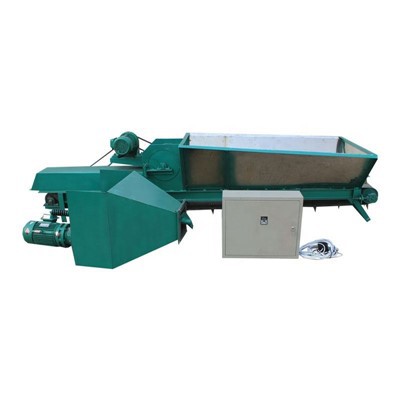
And let’s be clear: there’s no “perfect” crusher for every job. A mini crusher for lab use isn’t gonna handle 10,000 kg a day, and a heavy-duty industrial crusher isn’t worth the cost if you only need to crush 500 kg an hour. The key is matching the crusher to your specific needs, not chasing the lowest price or the highest rated throughput.
Plastic Crushing Equipment At the end of the day, your plastic crushing equipment is an investment, not a cost. Evaluate it right, and it’ll run smoothly for years, save you money on electricity and downtime, and make your whole recycling operation way more profitable. If you’re looking to chat through what kind of crusher fits your material, throughput, or budget, I’m here to help—no sales pitch, just real advice based on what I’ve seen work (and what’s a disaster) over the years.
References
- Plastics Industry Association. (2022). Best Practices for Plastic Scrap Processing & Crushing.
- European Plastics Converters Association. (2021). Crusher Performance Metrics for Recycling Operations.
- Society of Plastics Engineers. (2020). Blade Wear & Efficiency in Plastic Crushing Equipment.
- Institute of Scrap Recycling Industries. (2023). Operational Downtime & Cost Analysis for Recycling Machinery.
Laizhou Yuening Machinery Co., Ltd.
As one of the most reliable plastic crushing equipment manufacturers in China, we warmly welcome you to buy cheap plastic crushing equipment made in China here from our factory. All customized machines are with high quality and low price. For pricelist, contact us now.
Address: Yuanjia Village, Luwang, Shahe Town, Laizhou City, Yantai City, Shandong Province
E-mail: yueningjixie@163.com
WebSite: https://www.ynplasticmachinery.com/
