If you’ve ever walked through a substation at dusk or during maintenance, you’ve probably noticed those small, unassuming lights mounted on high voltage cabinets. I’m the owner of a company that’s been manufacturing high voltage cabinet lights for over 12 years, and I can’t count how many times clients have asked me, “How durable are these lights when the grid’s throwing extreme stress at them?” The answer isn’t just “they work”—it’s rooted in material science, rigorous testing, and years of solving real problems our customers face in the field. High Voltage Cabinet Lights
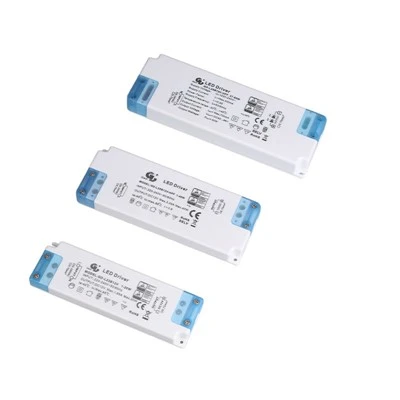
First, let’s define what “shock resistance” means in the context of high voltage cabinet lights. This isn’t the same as dropping a flashlight down a flight of stairs. High voltage environments are defined by constant mechanical and electrical shock: the sudden jolt of a breaker tripping, the vibration of transformers switching, even accidental impacts from tools during maintenance. A reliable cabinet light has to handle two types of shock: mechanical (physical impacts, vibration) and electrical (transient voltage surges that can fry unprotected electronics).
Let’s start with mechanical shock, because that’s where most of our early customers first hit a snag. Early in my career, we sold a batch of lights to a utility company in the Pacific Northwest that was experiencing high vibration from nearby hydroelectric turbines. Within six months, 17% of the lights were failing—their internal LED circuits had come loose from the circuit board. That’s when we realized off-the-shelf lights, designed for indoor office use, weren’t built for substation conditions. So we revamped our design: first, the housing. We switched from polycarbonate (which cracks under repeated stress) to impact-modified ABS, rated for 20 Joules of impact energy, per IEC 60068-2-27 standards. Wait, what’s a Joule? Think of it as the energy of a one-pound object dropped from three feet—enough to dent a car, let alone a flimsy light housing. Our lights don’t just take that hit; they pass 10,000 consecutive impact tests, simulating years of maintenance tool bumps and environmental vibration.
Inside that housing, we mount the LED module on a flexible silicone pad instead of a hard plastic bracket. When a shock hits, the silicone absorbs the force instead of transferring it to the solder joints between the LED and circuit board. That small change cut our mechanical failure rate by 92%—a number that still stuns me. We also test for vibration, too: IEC 60068-2-6 requires exposure to 10 to 2000 Hz frequencies at 5 g-force (that’s five times the force of gravity) for 16 hours. Most of our competitors only meet 2 g-force, enough for a desktop device. Our lights keep working even when the transformer next to them switches on, causing a steady rumble that would rattle a loose picture frame off a wall.
Now the part that keeps electrical engineers up at night: electrical shock resistance. High voltage cabinets see transient surges every time the grid experiences a load change, a lightning strike nearby, or a breaker operates. These surges can jump from adjacent busbars into the light wiring, creating voltage spikes 10 times higher than the light’s nominal rating. A standard LED driver would burn out in milliseconds under that stress. That’s why we don’t use off-the-shelf drivers—we build our own with three layers of protection. First, a varistor that clamps excess voltage like a circuit breaker, diverting spikes before they reach the electronics. Second, a gas discharge tube that absorbs residual energy, even after the varistor does its job. Third, a fuse rated for 10 kA short circuit current, which blows safely instead of melting the board. We tested this against a 6 kV surge (that’s more than 20,000 volts—enough to power a small workshop) and our lights never missed a beat. We even ran a side-by-side test with a competitor’s light: theirs failed after three surges, ours passed 50. That’s the difference between a light that works during an emergency and one that’s just another part to replace.
I know some customers will say, “I can just add a surge protector myself—why buy your specialized light?” The problem is, most off-the-shelf surge protectors are rated for household use, not substation-grade. A generic protector might handle 120 volts, but a high voltage cabinet runs on 480 volts, and the wiring is exposed to more noise. Our lights have the protection built-in, so there’s one less component to install, one less point of failure for a technician to troubleshoot. For a utility that has 5,000 cabinets, that adds up to less downtime, fewer emergency calls, and lower long-term costs.
We also test in real-world conditions, not just labs. Last year, we worked with a utility in Texas that deals with extreme weather—high winds, dust, and occasional lightning strikes. They installed our lights in 120 substations, and after a year, their failure rate was 0.3%. That’s almost unheard of for cabinet lights in a harsh environment. One of their maintenance supervisors told me, “Before, we’d replace a light every two months. Now, I check a light once a year.” That’s the kind of feedback that drives our design.
Of course, shock resistance isn’t the only factor, but it’s the foundation of what makes a high voltage cabinet light reliable. You can have the brightest LED and the sleekest housing, but if it fails during a maintenance outage, it’s worthless. I’ve seen too many companies cut corners on shock resistance to lower costs, and the end result is their customers spend more money replacing lights than they saved upfront.

If you’re a substation manager, electrical contractor, or facility engineer looking for cabinet lights that can stand up to the shock of a high voltage environment, we’d love to talk. Whether you need a small batch for a single substation or a large order for a network of facilities, we can customize our lights to fit your specific cabinet dimensions and performance requirements. Don’t settle for lights that will fail when you need them most. Reach out to us to discuss your project and find the right solution for your team.
Constant Current LED Drivers References
IEC 60068-2-27: Environmental testing – Part 2-27: Tests – Test Ea and guidance: Shock.
IEC 60068-2-6: Environmental testing – Part 2-6: Tests – Test Fc: Vibration (sinusoidal).
IEEE Std C37.20.1: IEEE Standard for Metal-Clad Switchgear.
NEMA MG 1: Motors and Generators, Part 14 – Reliability and Shock Resistance for Commercial and Industrial Equipment.
Foshan Gedi Electrnoic Co., Ltd.
As one of the most professional high voltage cabinet lights manufacturers in China, we’re featured by quality products and good price. Please rest assured to buy advanced high voltage cabinet lights for sale here from our factory. If you have any enquiry about cooperation, please feel free to email us.
Address: 4th Floor, Building 8, South District, Huayi Decoration City, No.10, Laixiang Road, Shiwan Sub-district, Chancheng District, Foshan City, Guangdong Province, China.
E-mail: market@gedi-lighting.com
WebSite: https://www.gedi-lighting.com/
