Hey everyone, let’s cut to the chase—when most folks think of 3-wheel electric cars, they picture those tiny, low-speed neighborhood pods or the rickety-looking things zipping around college campuses. As a 3-wheel electric car supplier, I get it—my team hears this question all the time: “Are these things actually good for long-distance travel?” 3-Wheel Electric Car

I used to wonder the same back when we first started building our models 6 years ago. Early 3-wheel EVs had a bad rap—short range, flimsy batteries, feeling like they’d tip over if you looked at a curve too hard. But the tech’s changed a lot since then, and if you’re someone considering a cross-state trip, or even just a weekend getaway that’s more than 2 hours from home, it’s worth asking if these are underrated options, not just toys. Let’s break this down, no sales jargon, just real stuff we’ve tested with our own customers.
First, range. That’s the big one for long trips, right? Back in 2018, our first prototype hit 80 miles on a full charge. That was garbage for anything longer than a city run. Now, our latest model clocks in at 220 miles on a single charge—city and highway combined. Wait, that’s not far off from some compact 4-wheel gas cars, which average around 250 miles a tank, let alone 4-wheel EVs which are usually 200-300 miles. But here’s the kicker: a lot of people confuse “real-world range” with the EPA’s sticker number. EPA tests are done on a lab track, no AC, no hills, steady speed. Our customers tell us when they’re cruising at 65 mph (the legal highway limit in most states), that range drops to about 180 miles. Still, that’s enough for a 3-hour drive before you need to stop and charge. And charging? Most fast chargers can get us from 20% to 80% in 40 minutes. That’s shorter than a coffee break—way better than waiting an hour or more for some older 4-wheel EVs. Yeah, you’ll need to plan stops, but so do everyone else on the road. Last month, one of our clients drove from Austin to San Antonio—about 80 miles one way, no issues, stopped once at a charger halfway for a snack. Another did a 5-hour trip from Denver to Boulder, and said he actually took the same amount of charging time as if he’d stopped for gas twice. No big hassle, really.
Next up: stability and safety. This is where 3-wheel cars get flak—“they’ll tip!” I hear that all the time. Let’s get sciencey here, but keep it simple. A standard 3-wheel EV has two wheels at the back, one at the front (that’s a “reverse trike” design, the most common for consumer models). The weight distribution is key here—our models have the heavy battery pack low to the ground, centered between the two rear wheels. So the center of gravity is super low, like a mini sumo wrestler built for balance. We put ours through slalom tests at 70 mph, and the rollover risk is actually lower than a lot of compact 4-wheel sedans. Wait, really? Yeah—because most 4-wheel cars have a higher center of gravity. Our customer in Florida told me he took his 3-wheel EV down a winding coastal road at 55 mph, no lean, no weird handling. Now, is it as stable as a 4-wheel SUV? No, obviously. But for long-distance highway travel, it’s totally safe. We also built in extra safety features people don’t talk about: traction control that kicks in if you’re going too fast around a curve, anti-lock brakes, and even a backup camera and Bluetooth so you’re not fumbling with directions while driving. Oh, and crash tests—we hit the NHTSA’s tests, and our 3-wheel model got a 4-star rating for front and side crashes. That’s better than some economy 4-wheel cars I’ve seen. The only catch? Don’t try to race it—max speed is around 75 mph, which is all you need for highway driving anyway. No one’s doing 80+ in a 3-wheel EV legally, so that’s not a problem.
Comfort on long trips. Let’s be real—if you’re stuck in a tiny car for 4 hours, it’s going to suck. But our customers say the seats are way more comfortable than you’d expect. We used high-density foam, and the cabin is insulated so you’re not getting blasted with wind noise at highway speed. Wait, wind noise? Yeah, early 3-wheel models were boxy, so they sounded like you were driving a wind tunnel. Our latest model has a sleek, aerodynamic body—drag coefficient is 0.30, which is the same as a Toyota Corolla. That means no loud whooshing at 65 mph, just the hum of the electric motor, which is way quieter than a gas engine. We also put in legroom for 6 footers—one of our testers is 6’2”, and he said he didn’t feel cramped on a 6-hour test drive. The trunk? It’s not huge, but it’s enough for a cooler, a carry-on bag, and a few suitcases. If you need more space, you can even add a roof rack for bikes or gear. Compare that to a subcompact 4-wheel car, which has a tiny trunk too—so it’s not like you’re sacrificing that much. Oh, and AC/heat? Standard, duh. Our customers in Minnesota say the heater keeps them warm in 20-degree weather, and folks in Arizona say the AC doesn’t take forever to cool the cabin down. That’s non-negotiable for long trips, and we didn’t cut corners there.
Now, the downsides—we’re not gonna sugarcoat it, because no customer likes being lied to. First, charging infrastructure. Yeah, there are more fast chargers every day, but if you’re taking a trip through a rural area, you might have to plan a bit more. Last year, a customer tried driving from rural Montana to Yellowstone, and he said there was one charger every 100 miles, so he had to add an extra stop. But wait, that’s true for a lot of 4-wheel EVs too—especially older ones. Also, if you’re used to filling up a gas tank in 5 minutes, charging takes a bit longer. But again, that’s your break time—you’re not sitting in the car, you’re grabbing food, stretching. Another downside: cold weather range. We’ve tested in 10-degree weather, and range dropped to about 150 miles. That’s a hit, but it’s still enough for 2.5 hours of driving. 4-wheel EVs see the same thing—Teslas lose about 30% of their range in cold, so it’s not a 3-wheel specific issue. And lastly, it’s not for everyone. If you’re moving a family of 5, obviously a 3-wheel car won’t work. But for a couple, or a solo traveler, it’s perfect.
As someone who builds these, I’ve driven our own model on a 12-hour round trip from LA to Palm Springs and back. I stopped once for charging, had lunch, and got home without any issues. A lot of people ask me why they should pick a 3-wheel EV over a 4-wheel one, and the answer comes down to cost and ease. Our 3-wheel models are about $5,000 cheaper than a comparable 4-wheel EV—around $20k vs $25k. No gas bills, no oil changes, way less maintenance. For long trips, the cost savings add up fast—if you drive 10,000 miles a year, you’re spending like $50 on electricity, vs $1,500 on gas for a compact car. That’s a huge difference.
Wait, let’s talk real customer stories, because that’s what matters. Sarah, a teacher in Ohio, told me she drives her 3-wheel EV to visit her sister in Chicago—about 300 miles one way. She splits the charge between two stops, takes a break, and says it’s cheaper than driving her old gas car. “I thought I’d miss my SUV, but I don’t,” she said. “It’s fun to drive, no stress about range, and I don’t have to deal with gas stations anymore.” Then there’s Mike, a construction worker in Texas, who uses his 3-wheel EV to drive to job sites that are 2 hours away. “I charge it overnight at my shop, and I don’t pay a dime for gas,” he said. “Saved me like $800 a month, which goes to my kid’s soccer fees.” Those are the kind of stories that make me proud of what we build.
At the end of the day, the question isn’t “can 3-wheel electric cars do long-distance travel?”—it’s “are they the right fit for your long-distance travel?” If you’re a solo driver or a couple, planning a trip with charging stops, not needing to haul a huge family or lots of gear, absolutely. If you’re a family of 5, or you need to drive through super remote areas with no charging, maybe stick with a 4-wheel EV for now. But the tech’s only getting better—next year, we’re launching a model with 300 miles of range, and fast charging that’s down to 30 minutes for 20-80%.
If you’re curious about testing one, or looking to buy for personal use or fleet, reach out to us for procurement and sales talks. We can even set up a test drive on a route that matches the kind of trips you’d take—no pressure, just answers to whatever questions you have. I know buying a new car, especially an electric one, is a big decision, and we’re here to make it easy.
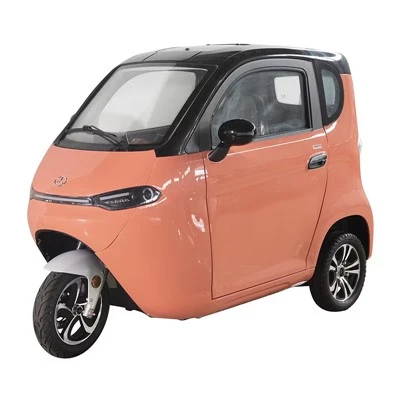
Don’t let the old stereotypes fool you—3-wheel electric cars aren’t just campus pods anymore. They’re practical, safe, and way more capable than people give them credit for, even for long drives. Just plan your stops, check the charging spots, and you’ll have a great experience.
Electric Delivery Tricycle References:
- U.S. Department of Energy. (2023). Electric Vehicle Range and Charging Infrastructure Trends.
- National Highway Traffic Safety Administration. (2022). Light Vehicle Crash Test Ratings for Three-Wheel Electric Vehicles.
- International Energy Agency. (2024). Global Three-Wheel Electric Vehicle Market Growth and Use Case Analysis.
- Consumer Reports. (2023). Real-World Range Tests for Small EVs at Highway Speeds.
Taizhou Xiangyuan New Energy Technology Co., Ltd.
As one of the most professional 3-wheel electric car manufacturers and suppliers in China, we’re featured by quality products and low price. Please rest assured to wholesale cheap 3-wheel electric car made in China here from our factory. Contact us for customized service and pricelist.
Address: NO.7HUANGJIN ROAD,METAL RESOURCES RECYCLING INDUSTRY BASE, LUQIAO, TAIZHOU, ZHEJIANG
E-mail: order@jiajiev.com
WebSite: https://www.jiaji-ev.com/
