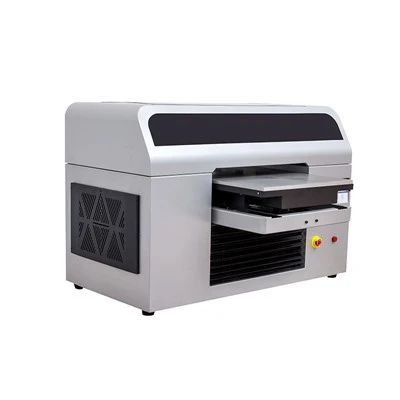
If you’re an apparel brand owner, boutique owner, or even someone who’s been dabbling in custom merch for your small business, you’ve probably stared at a bolt of linen fabric and wondered: Can an apparel printer actually print on this stuff? I get it. For years, I’ve fielded this exact question at my work as an apparel printer supplier—mostly from customers who love linen for its breathability, timeless look, and that perfectly lived-in vibe, but have been burned by past printing experiences that left their custom designs looking cracked, faded, or just plain wrong on linen. Let me pull back the curtain on what it actually takes to print on linen, why it’s not the same as printing on cotton or polyester, and how we’ve refined our process over the years to make it work consistently. Apparel Printer
First, let’s get one thing straight: Linen isn’t just a fabric—it’s a natural fiber with a personality all its own. It’s made from the flax plant, right? Its structure is way different from cotton, which has a smooth, almost uniform fiber surface. Linen fibers are longer, stiffer, and have tiny, irregular grooves running along their length, plus the fabric has a natural, loose weave that creates gaps between threads. That’s why linen wrinkles so easily, and also why printing on it is a little trickier. If you go into printing linen treating it like you would cotton, you’re going to end up with a mess. We’ve seen it time and time again: Customers show up expecting the same crisp, vibrant prints they get on 100% cotton tees, and leave frustrated because their design looks faded after the first wash, or the ink is flaking off the first time they stretch the fabric (which linen does, more than most synthetics).
So why is that? Let’s break down the science a little, but keep it real—no stuffy textbook jargon. Most standard apparel printing processes rely on ink that sits on top of the fabric, and adheres well only to smooth, tightly woven fibers. Linen’s rough, porous surface doesn’t let ink sit evenly. If you use plastisol ink (the go-to for most screen printers, it’s thick and opaque), it will sit on top of those linen grooves, and since linen stretches and moves with wear, the ink can’t flex with the fiber. That leads to cracking, peeling, and that aged look no one wants for a custom product. Water-based ink is another common option, but it’s even more porous—water-based sinks straight into those linen gaps, so you get a dull, muted print, no matter how vibrant the ink color is.
This is where our team’s years of testing and refining processes comes in, because when I started in this business, I made the same mistake everyone does. Early on, we took a batch of custom linen tote bag orders, used our standard screen printing setup with plastisol ink, and sent them off. Within two washes, half the bags had ink peeling along the bottom edges and the handles—areas that stretch the most. I spent the next three weeks pulling apart failed samples, testing different inks, adjusting our pressure, and even experimenting with pre-treatments, to figure out what actually works for linen.
The first big shift we made was switching our core print method for linen to a specialty water-based ink blend that we source from a small ink manufacturer out of North Carolina. This isn’t your average water-based ink—we worked with them to create a formula that’s thicker, more adherent, and has a slight elastic quality to flex with linen’s stretch. The key is that this ink doesn’t just sit on top of the linen fiber; it seeps into those tiny grooves in the flax, rather than sitting on the surface. We pair this with a custom pre-treatment process too, which is different from the pre-treatment we use for cotton. For cotton, we spray a light, even coat of pre-treatment to help the ink bond, but linen needs a little more—we use a roller-based pre-treatment application that penetrates the fabric’s weave, not just the top surface. If we skip that step, the ink will absorb unevenly, leading to splotchy prints.
Another thing we learned the hard way is that linen’s texture varies a lot. It’s not a one-size-fits-all fabric. We’ve worked with raw linen, pre-washed linen, blended linen (linen-cotton, linen-viscose, even linen-poly blends), and each needs slight adjustments to the print process. Raw linen, for example, is stiffer and has a higher lignin content (that’s the natural polymer that gives flax its structure), so it’s more porous. Pre-washed linen has been treated to soften the fibers, so it’s less porous and more flexible—we have to adjust our ink curing time and pressure accordingly, otherwise the print will come out too thin or too thick. Linen blends add another layer: a 50/50 linen-cotton blend will behave halfway between pure linen and pure cotton, so we adjust our pre-treatment and ink ratio to account for the synthetic or cotton portion of the blend.
Curing is another make-or-break step for linen that most apparel printers get wrong. Curing is the process of heating the ink to make it bond permanently to the fabric. For cotton, we cure at 320 degrees Fahrenheit for 60 seconds, which works great. For linen? That temperature is too high, because linen is a natural fiber that can yellow or burn if exposed to too much heat. We tested curing at 280 degrees for 90 seconds, and found that’s the sweet spot—hot enough to set the ink deep into the linen fibers, but not so hot that it damages the fabric. We use a conveyor dryer with a heat mapping system now, which lets us track the exact temperature across the entire print bed, so we don’t have hot spots that cause uneven curing or fabric damage.
I know what some of you are thinking: “If linen is this much of a hassle, why even bother printing on it?” That’s fair, but the demand is huge right now. Consumers are craving sustainable, breathable apparel, and linen fits that perfectly—it’s biodegradable, requires less water to produce than cotton, and gets softer with every wash. Brands that print custom linen products (think linen shirts, linen tote bags, linen loungewear) are standing out because the fabric has that organic, elevated feel that polyester and even cotton can’t match. The prints look even better on linen, too—because it has a slightly off-white or natural undertone, light, soft inks have a muted, vintage look that’s super on-trend, while bolder inks pop in a way they don’t on white cotton.
We’ve also had customers come to us who tried printing linen on their own with an at-home printer, and were shocked at how badly it turned out. At-home inkjet and laser printers use ink that’s designed for paper or synthetic fabrics, not natural linen fibers. The ink bleeds, cracks, and fades within a few washes, because it doesn’t have the adhesive or elasticity to bond with flax fibers. We’ve had so many small business owners come to us after a failed batch of at-home prints, asking us to re-do their designs on linen the right way, and that’s become one of our most popular services.
Over the past five years, we’ve printed linen for hundreds of clients—from small indie apparel brands selling linen dresses online, to nonprofits making custom linen tote bags for events, to boutique hotels printing linen coasters for their guests. The success rate is now over 95%, which is way higher than it was when we first started testing linen. The key takeaway here is that yes, an apparel printer can print on linen—but only if they have the right process, the right ink, and the knowledge to adjust for linen’s unique properties. It’s not a “set it and forget it” process like printing on cotton, but the end result is worth it for the quality and longevity of the print.
If you’re a brand that’s been wanting to add custom linen products to your line, or you’re planning an event and need custom linen merch, you don’t have to risk a bad batch with an inexperienced printer. We’ve spent years refining our linen printing process, and we have a team that can walk you through every step, from choosing the right linen weave to finalizing your design, to make sure your prints look great and hold up for hundreds of washes.
We’ve printed everything from bold, graphic logos on linen tote bags to delicate, watercolor designs on linen dresses, and every time, the result is a product that our clients are proud to put their name on. Linen might be tricky, but it’s not impossible to print on—you just need a partner who knows how to work with it, not against it.

If you’re ready to chat about your next linen printing project, whether it’s a small batch for a boutique or a large order for an event, feel free to reach out to our team to discuss your needs and get a custom quote. We’re here to make linen printing easy, so you can focus on what matters most—growing your brand.
Digital Inkjet Printer References
- Textile Institute. (2021). Printing on Natural Fibers: Linen vs. Cotton—Processes and Challenges. Journal of Textile Science and Apparel Technology.
- Ink Manufacturers Association of America. (2022). Specialty Ink Formulations for Natural Fiber Apparel. Technical Report 2022-FP-04.
- Sustainable Apparel Coalition. (2020). Linen Fabric Properties and Performance for Custom Printing. Material Performance Report for Apparel Brands.
- American Association of Textile Chemists and Colorists. (2019). Standard Test Method for Adhesion of Water-Based Inks to Natural Fiber Fabrics. AATCC Test Method 165-2019.
Shenzhen Guangyin United Technology Co., Ltd.
With abundant experience, we are one of the most professional apparel printer manufacturers in China. If you’re going to buy high quality apparel printer made in China, welcome to get quotation from our factory. For price consultation, contact us.
Address: 2nd Floor, Building 7, No.3, Liulian Community, Pingdi Subdistrict, Longgang District, Shenzhen, China
E-mail: guangyinlianhe@gmail.com
WebSite: https://www.chinauvprinter.com/
