If you’ve ever walked past a distillation plant, you might’ve thought, “It’s just heating stuff up and separating liquids, right?” But here’s the thing: a lot of those “stuff” are hazardous — flammable solvents, corrosive acids, toxic heavy metal compounds, even volatile organic compounds (VOCs) that can make you dizzy in 10 seconds flat. As a distillation plant supplier, I spend way more time talking to plant managers about hazard handling than I do about the number of plates in a distillation column, and for good reason. Mess this up, and you’re not just looking at a shutdown — you’re looking at OSHA fines, environmental spills, or worse. Let me break down how we actually do it, no boring textbook jargon, just the stuff I tell customers when they call panicking about a new batch of hazardous feedstock. Distillation Plant

First, let’s start before any distillation even happens. We call this “feedstock auditing,” and it’s the boring but make-or-break first step. You can’t just dump a mystery liquid into a distillation column and cross your fingers. A lot of old plants skip this, but that’s exactly how you get a reaction between two chemicals that shouldn’t mix — like, say, mixing a flammable ether with a strong oxidizer, which explodes if heated even a little. Here’s what we actually set up for our customers: before their feed hits our plant’s pre-heaters, we run a quick, in-line test (we call it a TOC sensor, but don’t overthink it) that checks for pH, flash point, and any hidden reactive contaminants. If the feed is too acidic, we add a neutralizer inline before it reaches the column. If the flash point is lower than what the plant is rated for (we spec all our distillation plants for a minimum flash point threshold, but some customers cut corners on upgrades), we adjust the nitrogen blanketing — that’s a fancy way of saying we flood the space above the liquid with inert gas so there’s no oxygen to start a fire. I once had a customer who tried to skip the feed audit because his team was “too busy” to run tests. Three days later, his column overpressurized because he accidentally fed in a batch of leftover bleach mixed with alcohol. Oops. That’s exactly why we hammer the audit step so hard.
Next, the distillation column itself is designed like a safety net, not just a separator. People think the column’s job is to split ethanol from water, but for hazardous materials, it’s also built to contain what could go wrong. Let’s talk pressure first. Most hazardous distillates boil at lower temperatures, so we run our columns under a vacuum more often than not — lower boiling point means less heat, which means less chance of a runaway reaction. But even vacuum has a risk: if the vacuum pump fails, air can rush in and mix with flammable vapors. That’s why we install what we call “failure interlocks” on all our plants — not just a manual alarm, but automatic shutoffs that do things without someone having to click a button. If the vacuum drops below a safe level, the feed valve closes, the nitrogen blanketing cranks up, and the vapor line opens to a flare stack before anything can build up. For corrosive materials, like hydrochloric acid or acetic acid mixes, we line the column with specialized alloys (Hastelloy, mostly, instead of cheap stainless steel) so the acid doesn’t eat through the metal over time. Old plants use regular steel, and after a few years, a pinhole leak can spray acid all over a worker. We spec that lining as standard for any plant handling hazardous materials — it’s not an extra, it’s a non-negotiable.
Then there’s the part everyone hates: vapor handling. The whole point of distillation is to turn liquid into vapor, and vapor is where 90% of the hazard lives. Flammable vapors hang low and explode, toxic vapors can kill in minutes, VOCs are greenhouse gases too. So we don’t just vent those vapors into the air — that’s a super bad idea. Instead, we run two layers of vapor treatment, and this is where a lot of cut-rate suppliers save money and get customers in trouble. First, we pass the vapor through a condenser that cools it back into liquid, but not just any condenser — a double-tube condenser made of the same alloy as the column, so no leaks. Any vapor that doesn’t condense (light stuff like methane or benzene) goes to a “carbon bed adsorber” — activated carbon that traps toxic or flammable molecules. Then, the last line of defense is a thermal oxidizer, or what we call a “flare” (it’s not just a big fire, trust me). We heat the remaining vapor to 1,800 degrees Fahrenheit for a second, so any leftover hazardous compounds break down into carbon dioxide and water, which are way less bad. A customer of mine once tried to skip the thermal oxidizer on a small plant for cleaning solvents — they thought the carbon bed was enough. Six months later, they had a state environmental fine for releasing 50 gallons of solvent vapor into the local air. That fine was 10x the cost of adding the oxidizer. Moral of the story: don’t skip the last step.
Now, what about waste? Distillation makes a “bottoms stream” — the gunk that doesn’t vaporize, like heavy metals or concentrated acids. You can’t just dump that down a drain. We set up what’s called a “sludge treatment system” that’s part of the distillation plant package. First, we neutralize corrosive bottoms to a pH that’s safe to transport, then we filter out any solid hazardous materials (like heavy metal salts) and package them for proper hazardous waste disposal. The liquid leftover after filtering is tested by a third-party lab before it’s even considered for discharge. I’ve seen plants try to cut corners here too: they neutralize the pH just enough to pass a quick test, but it’s still got trace amounts of lead. Then the EPA shows up, fines them $50k, and makes them redo the treatment from scratch. We make sure our customers have a way to track the bottoms stream the whole time — we install sensors that log pH, metal content, and volume, so there’s no “mystery gunk” to dump.
But wait, safety isn’t just equipment — it’s people too. That’s the part a lot of suppliers (including, I’ll admit, some of the big, corporate ones) overlook. When we sell a distillation plant, we don’t just drop it off and leave. We do a two-day training for the plant’s ops team, specific to the hazardous materials they’re handling. If it’s a pharmaceutical plant distilling toxic API (active pharmaceutical ingredients), we teach them how to spot a leak in a vapor line, what to do if the feed audit alarm goes off, how to suit up for a spill. If it’s a chemical plant handling flammable solvents, we run a mock emergency drill for a column overpressure, so they know not to try to shut the feed valve manually when the alarm is blaring — they hit the interlock button. We also give them a quick reference card (no 500-page manual) that lists, in big bold letters, the flash point, PPE requirements, and emergency contact for hazardous response, tailored exactly to their plant. Last year, a customer’s new ops lead tried to skip the training, and when a small leak happened, he didn’t know to turn off the nitrogen blanketing — he cranked it up, making the vapor cloud bigger. The training would’ve taken 4 hours, and prevented a 2-hour shutdown. That’s the stuff we’re there for, not just the steel and pipes.
Now, let’s talk about the stuff that goes wrong even when you do everything right. No plant is 100% safe 100% of the time, right? Hazards are unpredictable. That’s why we build in redundancy. For every single safety system: two vacuum pumps, two interlock shutoff valves, two carbon beds, two vapor sensors. So if one fails, the other kicks in. I had a customer last year where one vapor pressure sensor failed, but the second one caught it, and the shutoff worked. If he’d only had one, he would’ve had a vapor leak. We also install pressure relief valves on every part of the plant, so if something does overpressurize, it vents to a safe area, not into a worker’s face or a nearby office. We test all these safety systems monthly, not just once a year during an audit. It’s a pain, but it’s way better than the alternative.
Wait, I should address a common myth too: some people think “hazardous distillation” only happens in big industrial plants. No way. We sell small, skid-mounted distillation plants for labs, specialty chemical makers, even food companies distilling flavor extracts. Those small plants still handle hazardous materials — like, the extract from natural vanilla has flammable oils, and the solvent used to pull it is sometimes hexane, which is toxic. So even a $50k skid plant gets the same safety features: feed audit, nitrogen blanketing, vapor treatment. We don’t skimp on that just because it’s smaller. Last year, a small craft distillery (wait, no, not the alcohol kind — the flavor extract kind) called us because their old skid plant had a hexane vapor leak. The carbon bed was too small, and the condenser was cheap, so vapor was escaping. We upgraded their vapor treatment system for 10% of the cost of a new plant, and they haven’t had a leak since.
At the end of the day, handling hazardous materials in a distillation plant isn’t rocket science — it’s consistent, boring, non-negotiable steps. It’s not about having the fanciest column or the highest yield. It’s about auditing your feed, designing for pressure and corrosion, treating every vapor, taking care of the bottoms, training your team, and building redundancy so when something breaks, it doesn’t become a disaster. That’s the stuff I go over with every customer, even before we talk about specs or pricing.
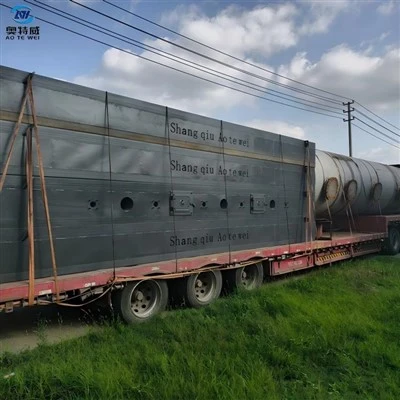
If you’re running a distillation plant, or planning to build one, and you need to make sure your hazardous materials are handled right — the kind of right that doesn’t get you fined, doesn’t shut you down, and keeps your team safe — hit me up. We’ll walk through your feedstock, your current safety setup, and figure out what you need, no sales jargon, no hidden fees. No empty promises, just solid, science-backed stuff that works.
Distillation Plant References
- Occupational Safety and Health Administration (OSHA). Process Safety Management of Highly Hazardous Chemicals, 29 CFR 1910.119.
- Environmental Protection Agency (EPA). Hazardous Waste Treatment Technologies: Distillation and Adsorption, EPA 530-F-19-002.
- American Institute of Chemical Engineers (AIChE). Guidelines for Distillation System Safety, 2021.
- National Fire Protection Association (NFPA). Standard on Flammable Liquids, NFPA 30.
Shangqiu Aotewei Environmental Protection Equipment Co., Ltd.
Shangqiu Aotewei Environmental Protection Equipment Co., Ltd. is one of the most professional distillation plant manufacturers and suppliers in China, also supports customized service. Please feel free to buy CE approved distillation plant at competitive price from our factory. Welcome to contact us for pricelist.
Address: No.88 Longhai Road, Liangyuan District, Shangqiu City, Henan Province, China
E-mail: colin@henanpower.com.cn
WebSite: https://www.aoteweitech.com/
