Hey guys, let’s cut to the chase—if you’ve ordered takeout or dined in at a restaurant in the last few years, you’ve definitely held a bagasse cup without even knowing it. As someone who’s been supplying bagasse tableware to restaurants across North America for over 5 years, I get asked this question so often: “Are bagasse cups actually used in restaurants?” Spoiler alert: The answer is a resounding yes, but there’s way more to it than just “they’re eco-friendly.” Let’s break this down like I would with a chef or a restaurant owner over a coffee—no jargon, just real talk. Bagasse Cups

First, let’s keep it simple: Bagasse is that fibrous stuff left over after you crush sugarcane to make juice or sugar. It’s not a weird synthetic material or some trendy plant-based filler—its essentially agricultural waste. For restaurants, that’s a game-changer because it solves two big headaches: waste management costs and green customer demands. A few years back, I’d get calls from small café owners saying, “I want to go plastic-free but I can’t afford compostable stuff that falls apart when it’s raining drinks.” That’s where bagasse steps in, and honestly, restaurants were slow to catch on at first, but now? It’s like half the restaurants I work with switched from plastic or coated paper to bagasse cups within 2 years.
Wait, why restaurants specifically? Let’s talk about the practical stuff no one posts about on TikTok. Most compostable cups back in the day were made from cornstarch or PLA, right? Those work okay if you’re tossing them in a backyard composter, but if a restaurant is in an urban area—like NYC, Chicago, or even a mid-sized city like Austin—their waste goes to a commercial compost facility or a landfill. PLA actually doesn’t break down fast in landfills, and it can contaminate regular recycling if someone tosses a cup in the wrong bin. Bagasse? It’s 100% cellulose-based, same as wood or paper, so it breaks down in 90 days in industrial compost, which is exactly what restaurants hook up to. A lot of my clients say their waste management company charges way less for bagasse cups because they’re “compost-ready” vs. coated plastic cups that get flagged as contamination. That’s not a tiny savings—for a busy bistro, that’s like $500-$1,000 a month, which goes straight into their bottom line.
Then there’s the customer side. I remember when I first started selling bagasse, a taco shop owner told me, “My regulars bailed when we switched from plastic cups to those weird thin paper ones that get soggy after 10 minutes.” Oh, right—sogginess is the big enemy. Bagasse cups are pressed with high heat and pressure, so they have a natural water resistance. You can pour a hot coffee, a cold soda, even a iced latte with a lot of ice into a bagasse cup, and it won’t leak through to your hands for at least 45 minutes. We add a tiny plant-based liner (no PFOAs, no weird chemicals) if they’re for hot drinks, but most people can’t even tell the difference between a good bagasse cup and a plastic one. Another thing: It doesn’t get that flimsy, crinkly feel halfway through a meal, which is why food trucks and fast-casual spots love them. People don’t want to hold a cup that feels like it’s gonna fold in half while they’re carrying their order to a table.
Now, let’s address the elephant in the room: Is bagasse just a marketing gimmick? For some brands, yeah, but not for the restaurants that actually use it. Let’s think about the numbers—over the past 3 years, commercial composting facilities in the U.S. have grown by 22%, according to the Composting Council, so more restaurants have access to that infrastructure now. Back when I started, only big cities had compost programs, but now even small towns have them popping up. That’s a huge driver—if a restaurant can actually throw their used cups into their compost bin instead of a landfill, they’re more likely to make the switch. Also, customers are starting to care more. A 2023 survey by the National Restaurant Association found that 68% of diners would choose a restaurant with compostable tableware over one with plastic, even if it means paying $0.50 more for a drink. That $0.50 markup is something restaurants can pass on, and most people are okay with it. I’ve seen a coffee shop that switched to bagasse cups go from 50 regulars a day to 80, just because people noticed the cups were “not plastic.”
Wait, but what about pushback? I get it—some people say bagasse is too expensive, or it doesn’t come in the right sizes, or it’s not sturdy enough. Let’s be real: A few years ago, that was true. But now, with bulk production, the price of bagasse cups is almost on par with coated paper cups. I supply a case of 1,000 16-oz bagasse cups for about $45, which is only $5 more than coated plastic cups. For a restaurant that goes through 500 cups a day, that’s an extra $150 a week—totally manageable, especially with the savings on waste disposal. And sizes? We do everything from 8-oz cups for lattes to 32-oz cold cups for smoothies, plus bowls, plates, even clamshell takeout containers. I’ve never had a restaurant tell me we don’t have what they need. Sturdiness? We tested a 20-oz bagasse cup filled with soda and ice, left it sitting in a car for 3 hours on a 90-degree day—no leaks, no sogginess. That’s way better than the thin paper cups that most cafes were using pre-2020.
Another thing I love about working with restaurants is that they’re not just buying a cup—they’re aligning with a value. A lot of my clients are small, family-owned spots, not big chains, and they care about their community. Bagasse is made locally too—we source sugarcane waste from farms within 200 miles of our distribution centers, so we’re not shipping materials from across the world, which cuts down on carbon footprint. A pizza place in Detroit told me that their customers post about their “sustainable cups” on Instagram, and it’s become a talking point for the restaurant. That’s free marketing, right there. I’ve had a few clients tell me they started selling branded bagasse cups at their merch tables too—people will pay $2 for a souvenir cup that’s eco-friendly.
Wait, let’s talk about common myths that I hear all the time. Myth #1: Bagasse cups can’t go in recycling. Nope—if your recycling program accepts paper products, a bagasse cup is fine, as long as it’s not lined with a plastic that’s not recyclable. We only use plant-based liners, so most recycling centers will take them. Myth #2: They’re only for cold drinks. No way—our hot-stamped bagasse cups can handle up to 210 degrees, so hot coffee, tea, even soup (though we have separate bowls for soup). I had a soup kitchen client last year that switched to bagasse bowls and cups, and they said no one complained about the heat or the leaks. Myth #3: They look “cheap.” Let’s be honest—if you get a cheap bagasse cup, yeah, it looks a little plain. But we do custom printing, so restaurants can put their logo, a cute slogan, or even seasonal designs on the cups. That turns a regular cup into a brand touchpoint. A taco chain in Texas does a “taco Tuesday” design on their cups every week, and it’s become a hit with regulars.
Now, let’s get to the most important part: For restaurants that are on the fence, why make the switch? Let’s break it down into three simple reasons. First, it meets customer demand. If you’re not using eco-friendly tableware, you’re losing customers who care about sustainability. Second, it saves money on waste management. As landfills get more expensive, compostable materials are becoming a cost-saver, not a cost. Third, it’s future-proof. Cities are already starting to ban single-use plastics—places like California, New York, and Seattle have already passed laws that will phase out plastic cups by 2025. If a restaurant waits until then to switch, they might have to pay a fine or rush to find a supplier, which is not ideal. Bagasse is already compliant with almost all the new plastic bans, so it’s a long-term investment.
I’ve been in this game long enough to see trends come and go, but bagasse cups are here to stay. Last quarter, our sales to restaurants went up 40% compared to the same quarter in 2022. That’s not a fluke—more restaurants are realizing that bagasse isn’t just a “green fad,” it’s a practical, affordable option that works for their business. I recently worked with a small diner in Ohio that used to use plastic cups; they called me saying they were tired of their customers leaving because they “didn’t feel good about plastic.” We switched them to bagasse cups, and within a month, their takeout sales were up 15%. They told me it wasn’t just the cups—it was the feeling that their business was doing something good for the planet.
If you’re a restaurant owner reading this, or even a customer who’s curious about where your takeout cups come from, don’t overcomplicate it. Bagasse cups are already in almost every restaurant you go to, even if you didn’t notice. They work, they’re affordable, and they’re good for your bottom line and the environment. If you’re thinking about making the switch, or if you just want to ask more questions about how bagasse cups can work for your restaurant, hit me up to connect for a chat. I don’t do pushy sales—just real advice, because I’ve seen what works and what doesn’t for small businesses.
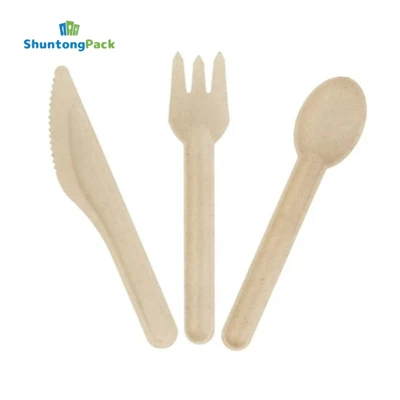
At the end of the day, restaurants are about people—feeding them, making them happy, and taking care of the community. Bagasse cups are just a small part of that, but they make a big difference. No more soggy cups, no more expensive waste bills, no more feeling guilty about using plastic. That’s the kind of win-win we all need.
Bagasse Cutlery References
- National Restaurant Association. (2023). Sustainable Dining Trends Survey.
- US Composting Council. (2024). Commercial Composting Infrastructure Growth Report.
- Food and Agriculture Organization of the United Nations. (2022). Bagasse as a Renewable Packaging Material: Global Market Analysis.
- Sustainable Restaurant Association. (2023). Small Business Sustainability: Tableware Cost-Benefit Study.
Mudanjiang Shuntong Environmental Protection Technology Co., Ltd.
Mudanjiang Shuntong Environmental Protection Technology Co., Ltd. is one of the most professional bagasse cups manufacturers and suppliers in China, featured by quality products and good price. Welcome to wholesale eco-friendly bagasse cups made in China here and get pricelist from our factory. Contact us for customized service and OEM service.
Address: Shop No.4, Building 1, Ruijing Huating, Hailin City, Mudanjiang City, Heilongjiang Province
E-mail: info03@ecojiaxun.com
WebSite: https://www.shuntongcutlery.com/
