Hey there! Let’s cut to the chase: if you own an electric car or even a gas-powered car with a lithium start battery, you’ve probably stared at your battery terminal and wondered, “Do I actually need a dedicated charger for this thing?” I’m not here to give you some stuffy manual regurgitation— I’m a battery charger supplier, so I’ve talked to hundreds of drivers confused about this exact question. Let’s break it down like we’re grabbing coffee after a long shift. Battery Charger
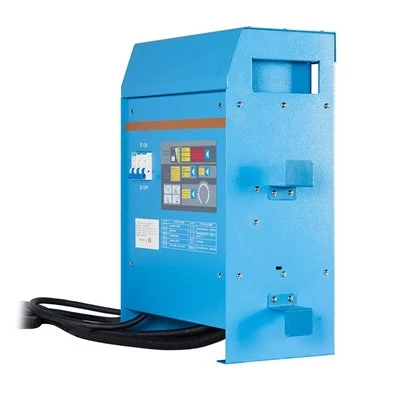
First, let’s get one thing straight: lithium car batteries aren’t the same as the old lead-acid batteries your dad’s pickup ran on. I still see drivers mix these two up all the time, and that’s where half the confusion comes from. Lead-acid batteries are the clunky ones that need a lot of maintenance— you could leave ’em dead for a week and a jump start would usually bring ’em back. Lithium? Nah, they’re way smarter, but way more finicky if you don’t treat ’em right.
Here’s the core question: “Do I need a charger?” Let’s start with the basics. If you’re driving your car every single day— commuting, running errands, hitting the highway— your car’s alternator is already taking care of charging the lithium battery. The alternator kicks in when the battery’s at a certain voltage, tops it off while you drive. That’s great for daily use, right? But here’s the catch: most drivers don’t do that. A lot of us have second cars, weekend cars, work trucks that sit for weeks on end. That’s where the problem starts.
Lithium batteries have something called “self-discharge rate.” Don’t let the term scare you— it’s just how fast they lose charge when they’re not being used. For lead-acid, that’s like 5-10% a month. For lithium? It’s way lower, usually 1-3% a month. Wait, that sounds good— why’s that a problem? Oh, but here’s the fine print: if the battery drains below a certain “minimum safe voltage” for too long, you can permanently damage it. For most lithium car batteries, that minimum is around 12.0 volts. If it drops below that and sits there for weeks? Cells start to sulfate (yeah, even lithium does this in a way) or get what we call “deep discharge damage”— and once that happens, the battery’s toast, or at least its lifespan gets cut in half.
That’s where a charger comes in. Let’s say you have a classic electric car you only drive on sunny weekends, or a work van that’s parked in the garage for 6 weeks over the holidays. If you just leave it to the alternator? By week 4, your battery’s already sitting at 11.5 volts— below that safe minimum. The alternator can’t fix that, because when the engine’s off, the alternator doesn’t do anything. Even if you start the car once a month to jump it, that’s a temporary charge, not a full, steady top-off. You’re playing a game of “charge and drain” that’s hard on the battery.
Now, not all chargers are created equal— and this is where being a charger supplier means I can tell you the real difference between a cheap one and a good one. A lot of guys grab a random lead-acid charger from the auto parts store and plug it into their lithium. That’s a bad move. Those cheap chargers usually put out a higher voltage or a different charging curve that can overheat or overcharge a lithium battery. We’ve seen customers come in with fried batteries because they used the wrong charger. The right charger for lithium car batteries is one that’s “lithium-specific”— it follows the exact charging profile lithium needs: slow initial charge, a hold at a set voltage, and a switch to a trickle charge once it’s full. That’s the sweet spot.
Wait, let’s test this with a real example. Last month, a customer brought in his 2-year-old Tesla Model 3— he used it only for road trips, so it sat in his garage for 8 weeks at a time. He tried jump starting it once, but it still died mid-road trip. We checked the battery’s health: it was down to 72% capacity, way lower than the 90% it should’ve been at. Why? He was using a generic lead-acid charger that wasn’t compatible. We sold him our lithium-specific smart charger, and 3 months later, he told us his battery’s back up to 88% and hasn’t died on him again. That’s the difference between having a charger that works and one that doesn’t.
Another thing: what if you have a mild hybrid or a plug-in hybrid? Their lithium batteries are even more sensitive. Those batteries work harder because they’re powering the electric motor and the regular 12V systems. If they sit unused, the battery’s drain is even faster because of all the little electronics— infotainment, anti-theft, keyless entry— that are always running. A lot of hybrid owners think “I plug in my big battery at home, so the 12V battery is fine.” Nope! The 12V lithium battery is separate, and it still needs to be charged regularly. We’ve had hybrid customers come in because their car wouldn’t start in the parking lot at work— that’s the 12V battery dying because it sat too long without a proper charge.
Now, let’s talk about what you don’t need a charger for. If you drive your car 3-4 times a week for at least 20 minutes each time, the alternator is more than enough to keep the battery charged. No need to plug anything in. If you’re only going on a 2-week trip, you can just disconnect the negative terminal to cut self-discharge, no charger required. But if it’s longer than that, or if your car is a second vehicle that sees less use than that? A charger is a no-brainer.
I know what some of you are thinking: “Charger costs money, I don’t want to spend it.” But let’s do the math. A good lithium car battery is anywhere from $150 to $300, depending on the size. A decent smart lithium charger is $50-$100. That’s a way smaller cost than replacing a battery that died because you skipped the charger. We’ve had customers tell us they saved hundreds on battery replacements just by using a charger once a month on their weekend car. It’s an investment, not an expense.
Wait, also— smart vs. manual chargers. Manual chargers are the old ones you have to turn off when the battery’s full. Those are okay for lead-acid, but for lithium? If you leave a manual charger plugged in too long, you can overcharge it. Smart chargers (which is what we sell) monitor the battery’s voltage, switch to a trickle charge when it’s full, and even shut off automatically if there’s a problem. That’s the safe way to go. No guesswork, no risk of messing up your battery.
Let’s clear up another myth: “Lithium batteries don’t need maintenance, so a charger is useless.” Yeah, they don’t need topping off with distilled water like lead-acid, but they do need regular voltage maintenance. That’s exactly what a charger does. It keeps the battery’s charge right in that sweet spot— not too full, not too empty— which extends its lifespan. We see lithium batteries last 5-7 years with proper charging, versus 2-3 years when they’re left to sit without a charger. That’s a huge difference.
Now, let’s circle back to the original question: “Do I need a charger?” It’s not a yes/no answer— it’s a “when” answer. If your car is driven daily, no. If it’s driven occasionally (once a week or less), yes. If it’s unused for more than 2 weeks at a time, absolutely yes. If you have a hybrid or electric vehicle with a separate 12V lithium battery, that’s even more reason to get one.
If you’re still on the fence, here’s what I tell all my friends (and customers): grab a basic smart lithium charger, plug it into your battery once a month when your car’s sitting idle. It takes 2 minutes to set up, and it saves you the headache of a dead battery when you need your car most. I’ve been in this business for 8 years, and I can’t tell you how many avoidable battery deaths I’ve seen because people skipped this simple step.
If you’re looking for the right charger— one that’s made for lithium car batteries, not the cheap lead-acid ones, and built to last— don’t hesitate to reach out. We’ve got options for every size battery, every type of car, and we can help you pick the perfect one for your setup. No sales pitch, just straight talk— I’ve been where you are, staring at a dead battery wondering why this stuff has to be so confusing.

At the end of the day, a lithium car battery is an investment in your car. A charger is the cheap, easy way to protect that investment. Don’t wait until your battery dies on a cold morning (or a hot summer day— heat is also bad for lithium!) to realize you should’ve had one.
Marine Battery Charger References
- Battery University. (n.d.). Lithium-Ion Battery Self-Discharge. Cadex Electronics Inc.
- United States Department of Energy. (2022). Electric Vehicle Battery Maintenance and Care. U.S. Department of Energy, Office of Energy Efficiency & Renewable Energy.
- Society of Automotive Engineers. (2021). Recommended Practices for Charging 12V Lithium-Ion Batteries in Light-Duty Vehicles. SAE International.
- Cadex Electronics. (2020). Lithium vs. Lead-Acid Batteries: Key Differences for Automotive Applications. Cadex Electronics Inc.
- International Organization for Standardization. (2019). ISO 12405: Electrically propelled road vehicles – Test specification for lithium-ion traction battery packs and systems. ISO.
Huizhou Qiangfeng Power Technology Co., Ltd.
Huizhou Qiangfeng Power Technology Co., Ltd. is one of the most professional battery charger manufacturers and suppliers in China, featured by quality products and good service. We warmly welcome you to buy customized battery charger made in China here from our factory. If you have any enquiry about quotation and free sample, please feel free to email us.
Address: No. 28, Hu’ao Avenue, Shiwan Town, Boluo County, Huizhou City, Guangdong Province
E-mail: Komco@Jinlidianqi.cn
WebSite: https://www.autobatterychargers.com/
