If you’re working with zinc die casting—whether you’re an engineer, a product designer, or someone just learning the process—you’ve probably wondered if you can add inserts to your cast parts. As a zinc die casting supplier who’s been in this game for over a decade, I get this question all the time. The short answer? Yes, you absolutely can. But like most things in manufacturing, it’s not as simple as “just sticking a metal piece in a mold.” There’s a method to the madness, and getting it right makes all the difference in the strength, functionality, and cost of your final part. Zinc Die Casting
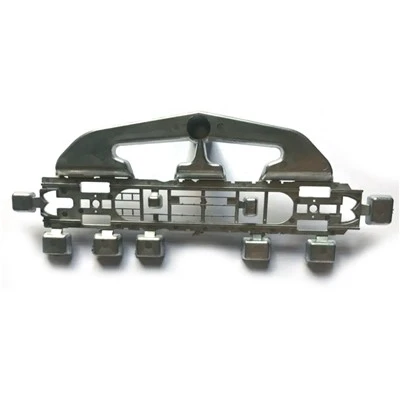
Let’s start with why inserts even matter. I’ve worked with clients who needed a part that was die-cast from zinc but required threaded holes for assembly, or a harder metal insert to handle high torque loads that zinc alone can’t take. Some needed a conductive insert for electrical connections, or a heat-resistant piece that wouldn’t warp when soldered. Zinc is great— it’s lightweight, has excellent dimensional accuracy, and is corrosion-resistant—but it’s not perfect for every application. Inserts let you combine zinc’s strengths with the specific properties of another material, without adding extra steps after casting. For example, instead of drilling and tapping a hole into a solid zinc part (which is slow and can lead to weak threads), you can place a threaded steel insert into the mold before pouring the zinc. The molten zinc solidifies around the insert, creating a bond that’s way stronger than any post-processing thread.
Now, how does this actually work? The process is called insert molding (or insert casting, in this case), and for zinc die casting, it’s more doable than you might think. First, you pick the right insert material. We most often use steel, brass, or copper inserts—they’re compatible with zinc, have good heat resistance, and create a tight mechanical bond. Aluminum inserts are possible too, but they need a little extra prep to prevent galvanic corrosion with zinc (more on that later).
Next, you have to prep the insert. This is the part most first-timers miss: if you just drop a cold, smooth metal piece into a mold and pour molten zinc around it, the insert will just float or get pushed out of place. Or, worse, the zinc won’t adhere properly, leading to a loose insert that falls out later. So we always add knurls, splines, or serrations to the insert surface. Those little bumps act like teeth, so when the zinc solidifies, it locks into those grooves. Some inserts also get a shot of coating (we use zinc or phosphate coatings) to improve the bond between the insert and the zinc—this is especially key for smooth metals like brass.
Then there’s the insert placement. In die casting, molds are clamped together at high pressure, so you can’t just set an insert in there manually. We use automated insert feeding systems—small robotic arms that pick up each insert, clean it (to remove any oils or debris), heat it slightly, and place it precisely in the mold cavity. Why heat it? If you put a cold insert into the mold, the molten zinc around it will cool too fast, leading to a weak bond. A preheated insert keeps the zinc molten long enough to flow evenly around the knurls, creating a stronger joint. We usually heat inserts to around 150–200°C (300–400°F)—not hot enough to damage the insert, but enough to prevent rapid cooling.
So what are the benefits of insert die casting for zinc, vs. casting zinc and adding inserts later? Let’s break it down. First, cost. Post-casting drilling, tapping, or pressing inserts adds labor and time. For a small part with 4 inserts, that’s 4 extra steps—each one requiring a machine operator, tools, and inspection. Insert casting combines those steps into one, cutting production time by 30–40% for many of our clients. Second, strength. A mechanical bond via knurls is way more reliable than a pressed-in insert or a drilled thread. We’ve had clients test parts with insert-cast threaded holes that handle 2x the torque of a post-processed hole, and they never fail. Third, design flexibility. If you’re designing a part that needs to connect to plastic, or handle high temperatures, you can mix zinc inserts with other materials right in the mold. No need for a separate assembly step.
But here’s the thing: it’s not all sunshine. There are some common pitfalls that can trip you up if you don’t plan ahead. The biggest one is galvanic corrosion. Zinc and other metals (like aluminum) have different electrochemical potentials, so when they’re exposed to moisture, they can create a small electric current that eats away at one of the metals. We’ve had a client learn this the hard way—they used aluminum inserts on a marine part, and within 6 months, the inserts started corroding, and the zinc around them pitted. Now, we always coat aluminum inserts with a nickel layer before casting, or avoid aluminum entirely for outdoor or high-humidity applications.
Another pitfall is insert size. If the insert is too small (less than 5mm in diameter), it can be hard to handle with automated systems, and the mold might not get enough zinc flow around it. If it’s too large (more than 25mm), it can create a hot spot in the mold, leading to shrinkage or warping in the zinc part. We usually work with our clients to adjust insert sizes to fit the part’s dimensions, and we test a small run before full production to make sure everything lines up.
Placement errors are also common. Even with automation, a small misalignment can lead to a part that’s unusable. For example, if an insert is 0.5mm off-center, the thread might be off, or the zinc might not fill the gap around it. That’s why we use precision molds with tight tolerances (usually ±0.05mm for insert positions) and 100% inspection for insert alignment on every batch. We also test for pull-out strength after casting—each insert has to hold at least 500N before it’s approved, so our clients know their parts won’t fail.
Wait, let’s talk about a real example. Last year, we worked with a client who makes power tool handles. They needed a zinc handle with threaded steel inserts to attach the motor and battery pack. Before they came to us, they were casting the handles and then pressing the inserts in manually. The problem was that 10% of the inserts would come loose during assembly, and they had to rework the defective parts, which cost them thousands a month. We switched them to insert casting: we heated the steel inserts to 180°C, knurled their surfaces, and placed them in the mold. The molten zinc flowed perfectly around the knurls, creating a bond that never failed. After the switch, their defect rate dropped to less than 1%, and they saved over $15,000 in rework costs in the first 3 months. That’s the kind of result insert casting can deliver.
Another example: automotive sensors. A client needed a sensor housing made of zinc with a copper insert for a conductor pin. Copper has excellent conductivity, so a copper insert is way better than a zinc pin for electrical connections. We cast the copper insert into the mold, and the zinc solidified around it, creating a tight seal that kept moisture out. The part passed all their environmental tests—temperature extremes, salt spray, vibration—something they couldn’t do with a pressed-in copper pin.
So, should you use insert casting for your zinc part? Let’s say you need threaded holes, better strength, specific conductivity, or a mix of materials. If your part has inserts that are 5–25mm, made of steel, brass, or copper, and you’re okay with a little prep work, then yes, it’s a no-brainer. But if your inserts are smaller than 5mm, or you need to use aluminum in a high-humidity environment, we can work with you to adjust the design or prep the insert to avoid issues.

As a supplier, we don’t just cast parts—we work with our clients to solve problems. If you’re stuck on a part design, wondering if insert die casting is right for you, or you’ve had bad experiences with loose inserts or galvanic corrosion, reach out. We can walk you through the process, test a prototype, and make sure your parts come out right the first time. No jargon, no hidden fees—just honest advice and reliable parts.
Die Casting Service References:
- “Insert Molding for Die Casting: Best Practices,” Zinc Die Casting Association, 2022.
- Galvanic Corrosion Prevention in Dissimilar Metal Assemblies, International Zinc Association, 2021.
- “Design Guidelines for Insert Die Casting,” Journal of Manufacturing Processes, Vol. 45, 2020.
Shenzhen Shunhaoda Technology Co., Ltd.
With abundant experience, we are one of the most professional zinc die casting manufacturers and suppliers in China. If you’re going to buy bulk high quality zinc die casting made in China, welcome to get free sample from our factory. Also, custom service is available.
Address: 902, Building A3, Tianrui Industrial Park, No. 35 Fuyuan 1st Road, Zhancheng Community, Fuhai Street, Bao’an District, Shenzhen
E-mail: sales@shdindustry.com
WebSite: https://www.shd-industry.com/
