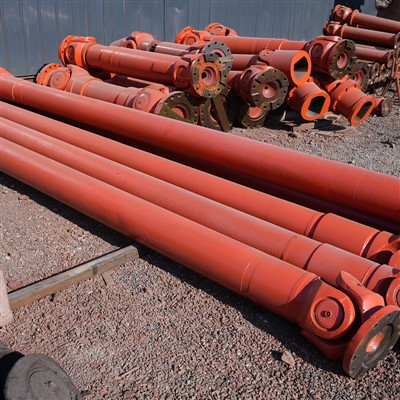
Hey there! I’m a supplier of Skew Rolling Mill Rolls, and today I wanna chat about the typical failure modes of these rolls. It’s super important to understand this, whether you’re in the business of using these rolls or just curious about how things work in the metalworking world. Skew Rolling Mill Rolls
1. Wear
One of the most common failure modes is wear. It’s like when you use your favorite pair of sneakers day in and day out, and eventually, the soles start to wear down. In the case of skew rolling mill rolls, wear happens due to the constant contact with the workpiece.
There are two main types of wear we often see: abrasive wear and adhesive wear. Abrasive wear occurs when hard particles on the surface of the workpiece scratch the roll surface. Think of it as sandpaper rubbing against a smooth surface. These hard particles can be debris from the workpiece itself or even some impurities in the material. Over time, these scratches can lead to a rough surface on the roll, which affects the quality of the rolled product.
Adhesive wear, on the other hand, is a bit more complex. When the roll and the workpiece come into contact under high pressure and temperature, there can be a transfer of material between them. It’s like when you stick two pieces of sticky tape together, and some of the adhesive from one side transfers to the other. In the roll, this material transfer can cause lumps and bumps on the roll surface, which again messes up the rolling process.
We’ve seen a lot of customers come to us with rolls that have suffered from wear. They notice that the rolled products are starting to have surface defects, like rough edges or uneven thickness. And that’s when they realize it’s time to either replace the rolls or have them refurbished.
2. Fatigue
Fatigue is another biggie. You know how you feel tired after a long – day at work? Well, rolls go through a similar kind of "tiredness" but in a mechanical sense. When a skew rolling mill roll is in operation, it’s subjected to cyclic stresses. Every time it makes contact with the workpiece, there’s a stress applied to it, and then when the contact is over, the stress is released.
Over a large number of these cycles, tiny cracks start to form on the roll surface. These are called fatigue cracks. At first, they’re so small that you can’t even see them with the naked eye. But as more and more cycles pass, these cracks grow. Eventually, they can become big enough to cause the roll to break or lose its structural integrity.
There are a few factors that can speed up the fatigue process. One is the magnitude of the stress. If the rolling process is set up in a way that the rolls are under very high stress, fatigue will happen faster. Another factor is the material properties of the roll. Some materials are more resistant to fatigue than others. For example, a high – quality alloy roll might last longer under cyclic stresses compared to a standard carbon – steel roll.
When we get calls from customers about fatigue – related issues, they usually mention sudden failures in the rolls. One minute, everything’s working fine, and the next, there’s a crack in the roll, and production has to stop. It’s really frustrating for them, which is why we always stress the importance of regular maintenance and choosing the right roll material.
3. Thermal Cracking
Let’s talk about thermal cracking. Rolling processes can generate a lot of heat. The friction between the roll and the workpiece, as well as the deformation of the workpiece, can cause the temperature of the roll to rise. And when there are rapid changes in temperature, thermal stress is created in the roll.
Imagine you take a hot glass and suddenly pour cold water on it. It’s likely to crack because of the difference in expansion and contraction rates in different parts of the glass. The same thing happens to skew rolling mill rolls. When the surface of the roll gets really hot during rolling and then cools down quickly, thermal cracks can form.
These cracks are often perpendicular to the surface of the roll. They can start small but eventually grow and cause the roll to fail. The risk of thermal cracking is higher in some rolling processes than others. For example, if you’re rolling a material that requires a lot of deformation, more heat will be generated, increasing the chances of thermal cracking.
We always remind our customers to have a good cooling system in place. A proper cooling system helps to control the temperature of the rolls and reduce the risk of thermal cracking. Some customers have found that using a cooling lubricant can also be very effective in keeping the temperature down and preventing thermal damage.
4. Corrosion
Finally, corrosion is a failure mode that can’t be ignored. If the skew rolling mill rolls are exposed to a corrosive environment, like a wet or acidic atmosphere, the roll surface can start to corrode. Corrosion is basically the chemical reaction between the metal of the roll and substances in the environment.
Just like rust forms on an old iron gate left out in the rain, corrosion on rolling mill rolls can eat away at the surface. This not only weakens the roll but also affects the quality of the rolled product. A corroded roll surface can leave marks on the workpiece, and in severe cases, can cause the workpiece to stick to the roll.
To prevent corrosion, we often recommend that our customers use protective coatings on the rolls. These coatings act as a barrier between the roll surface and the corrosive environment. Regular cleaning and inspection of the rolls can also help in detecting early signs of corrosion so that appropriate action can be taken.

So, there you have it – the typical failure modes of skew rolling mill rolls. Understanding these failure modes is crucial for anyone involved in the metal – rolling industry. It helps in choosing the right rolls, setting up the rolling process correctly, and carrying out proper maintenance.
Skew Rolling Mill Rolls If you’re in the market for high – quality skew rolling mill rolls or need advice on how to prevent these failure modes, don’t hesitate to reach out. We’re here to help you keep your production running smoothly. Contact us today to discuss your specific requirements and see how we can meet them.
References
- "Rolling Mill Technology Handbook", a comprehensive guide on the technology and operation of rolling mills.
- "Materials Science for Metalworking", which provides in – depth knowledge about the materials used in rolling mill rolls and their properties.
Shenyang Muren Machinery Co., Ltd.
We are one of the most professional skew rolling mill rolls manufacturers and suppliers in China, featured by quality products and good service. Please rest assured to wholesale customized skew rolling mill rolls at competitive price from our factory. Contact us for more details.
Address: No.16 Nansan Road, Shenyang Jinhai Economic Zone, Liaoning Province, China
E-mail: mulunjixie@163.com
WebSite: https://www.symuren.com/
